
Variable spring repair costs
What we can tell you is what drives the cost up or down: single springs versus a matched pair, standard-lift versus double life-cycle springs, and whether the opener needs to come out too.
Temecula, CA
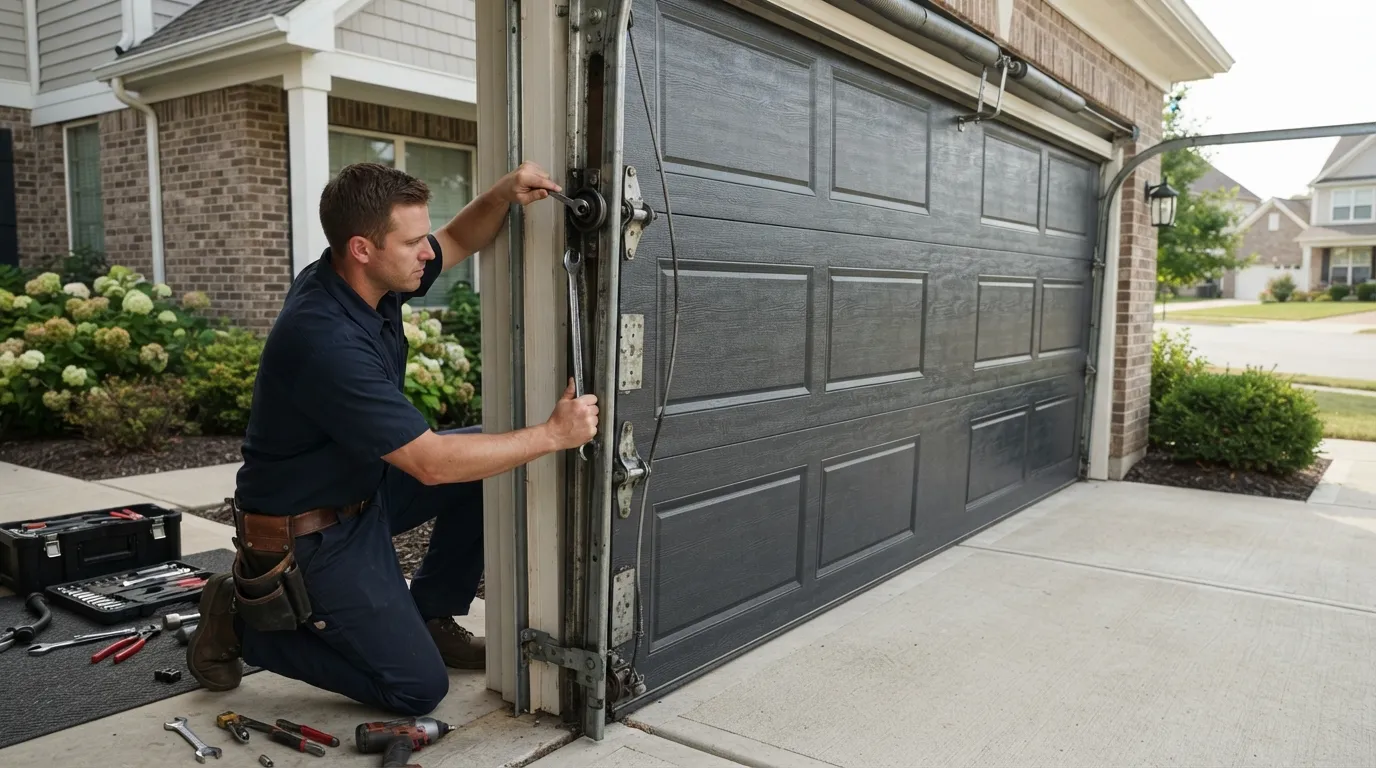
Broken spring or dead opener in Temecula? We handle emergency garage door repair across the service area, from 1980s tract homes to newer construction homes.
Local causes
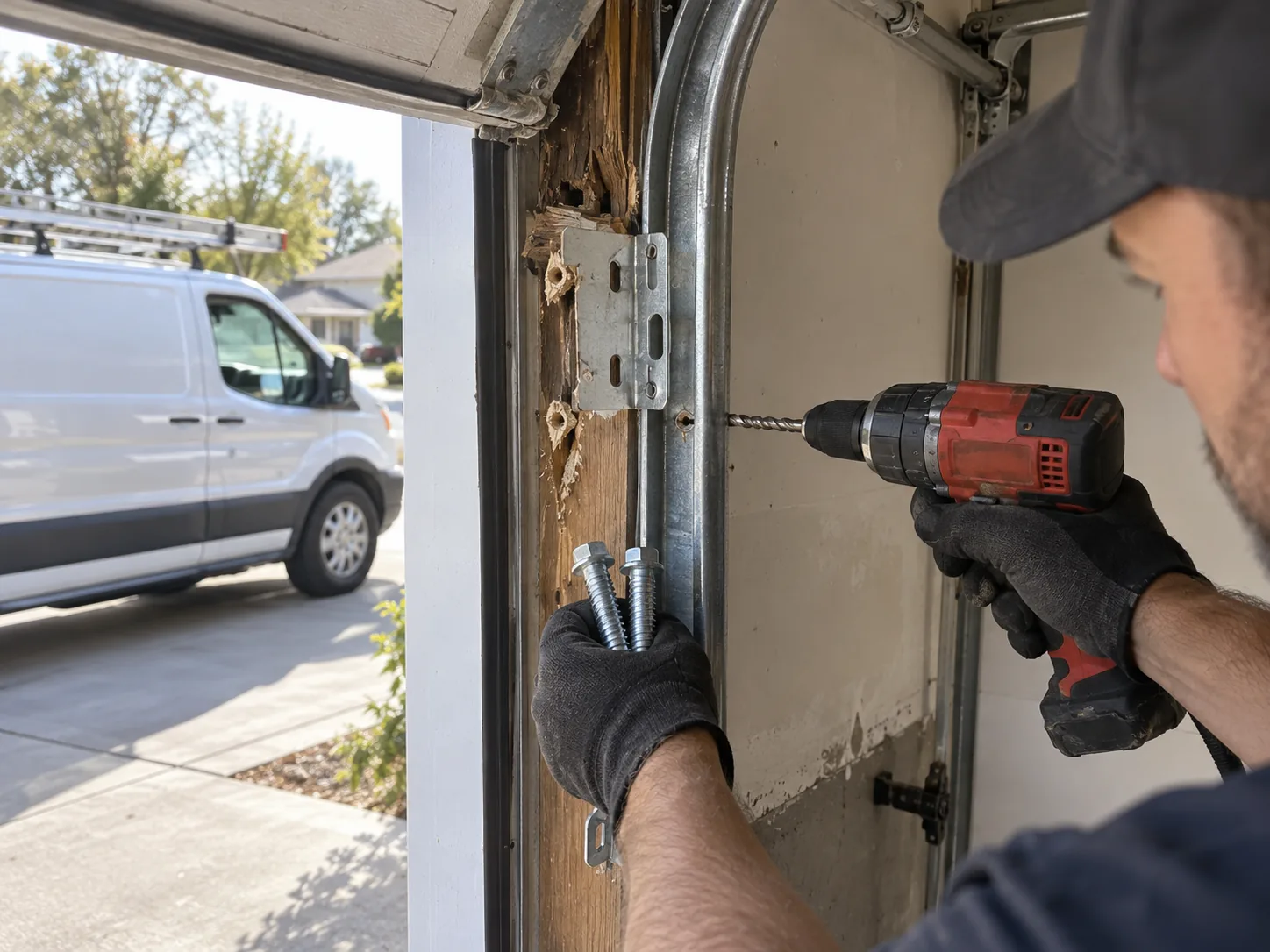
Most of the housing across this service area went up between 1975 and 2009, with the typical home dating to right around 1984, and a heavy cluster of stock from the 1980s and 90s. That matters because torsion springs are rated for a set number of open-close cycles, not a set number of years, and a door installed when a house was built in the mid-80s has usually run through that cycle count by now regardless of how well it was maintained. Same story with openers from that era - worn drive gears, tired capacitors, and logic boards that just quit without warning.
Our climate here runs mild temperate, so we're not chasing the ice-jammed tracks or heat-warped panels you'd see in a harsher climate. What we see instead is straight mechanical fatigue: springs that finally let go on the ten-thousandth cycle, cables that fray after years of the same friction point, rollers that have worn oval instead of round. It's wear, not weather, and it tends to hit all at once on a Saturday morning with the car half in the driveway.
A door that's fine on Monday and dead on Tuesday almost always traces back to a part that was already near the end of its life, not a sudden new problem.
Pricing
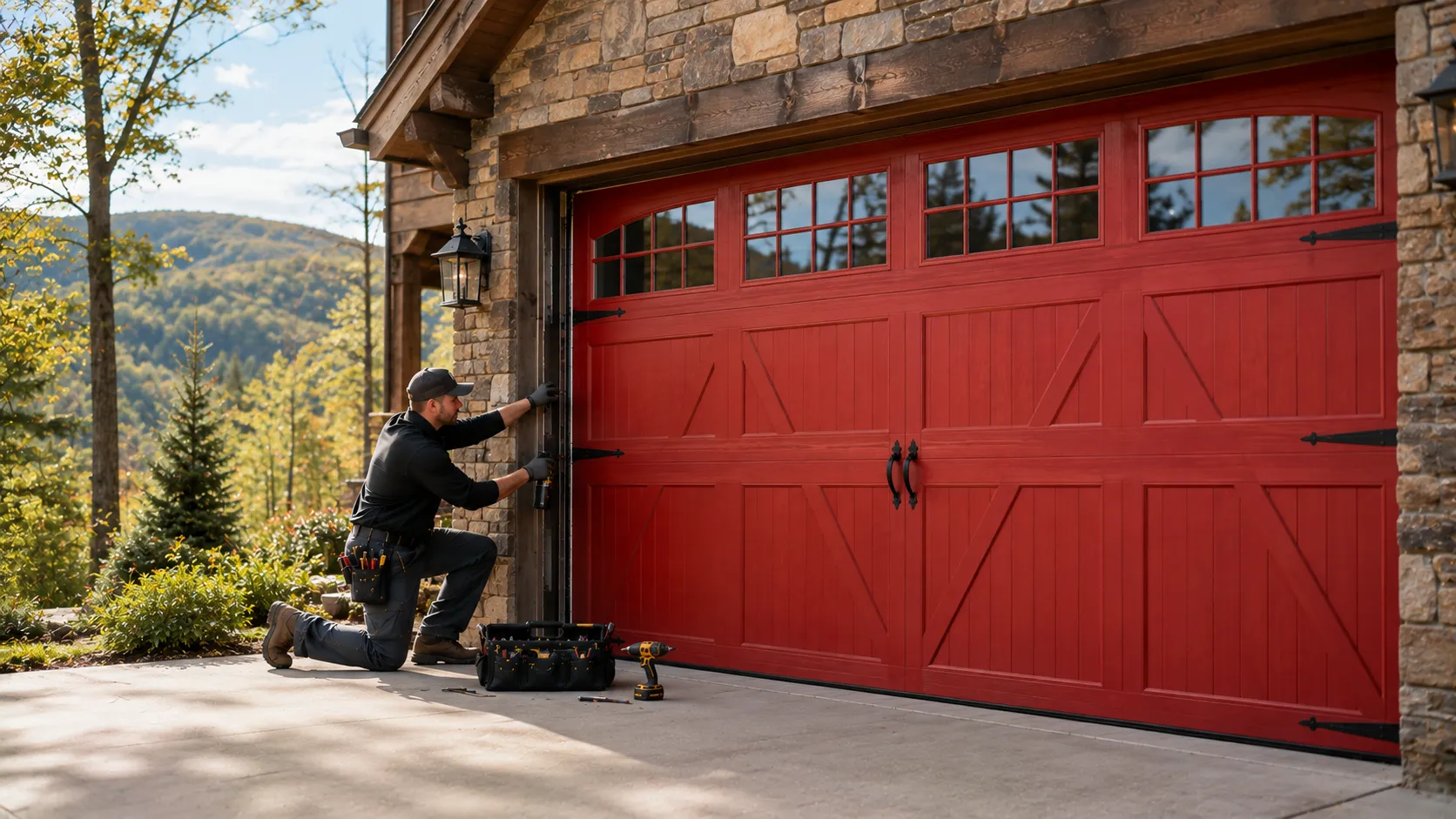
We're not going to put a number here that isn't grounded - every job depends on door size, spring type, and whether it's a repair or a full swap, and quoting a flat price without seeing the door would be a guess dressed up as a fact.
What we can tell you is what drives the cost up or down: single springs versus a matched pair, standard-lift versus double life-cycle springs, and whether the opener needs to come out too.
Across this service area, median household income runs about $88,879, and what we notice from that is fairly practical - a lot of owners choose to replace the full spring assembly rather than patch one side, because on a door that's already pushing 30-plus years old, a single-spring fix just means a second service call in a year or two.
That's a decision worth making with real numbers in front of you, not a phone estimate. One honest limitation: if your opener board is a discontinued model from the 80s or 90s, we may not be able to get an exact replacement part quickly, and a full opener swap sometimes ends up being the faster, more sensible call than chasing a part that's hard to source.
Timing
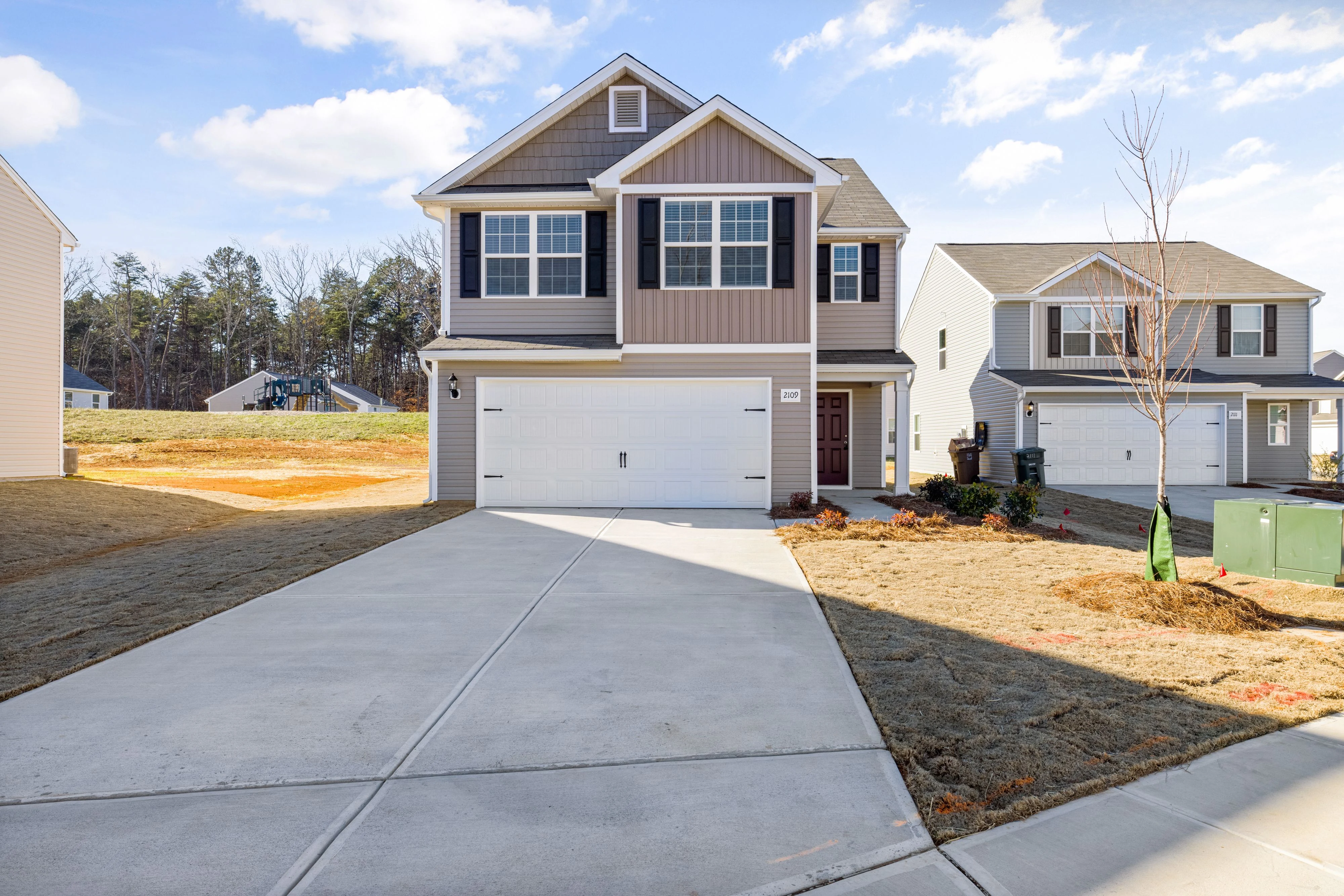
A stuck or off-track door is rarely a quick look. Diagnosing a spring failure takes minutes once we're on site - a snapped torsion spring is obvious - but an opener that's intermittently failing takes longer to isolate, since it could be the board, the sensors, the gear, or all three showing the same symptom of a door that won't respond.
We won't promise a response window here because that's not something we can state as a fact for every job and every day, but we will say this: a spring swap on a standard residential door is a same-visit job once parts are in the truck, while anything requiring a special-order part - an odd opener model or an obsolete track size on an older house - runs longer because that part has to be ordered in.
If your garage is the only way into the house, or a car is trapped inside, say so when you call. That changes how the job gets prioritized against everything else on the schedule that day.
Warning signs
The classic sign is the loud bang - a torsion spring letting go sounds like a gunshot from inside the garage, and after that the door won't budge, or it takes real muscle to lift by hand.
That's almost always a spring, not an opener. A door that opens partway and reverses, or that opens fine but won't close all the way, usually points to the sensors or the travel limits on the opener rather than the springs.
A door that's noticeably crooked when it moves, dropping lower on one side than the other, points to a cable that's slipped off its drum or frayed through - don't keep running the opener on that one, since it can bind and cause more damage.
Grinding or popping from the rollers is wear, not an emergency, but it's the kind of noise that tells you a cable or spring failure is coming. On the 1980s and 90s stock that makes up so much of this area's housing, we hear that grinding noise a lot right before the call about a door that won't move at all.
Questions
Yes, we work across the wider service area, including towns like Wildomar, Lake Elsinore, Winchester, and Valley Center, along with the smaller communities further out like Sage, Aguanga, and Homeland. Response depends on where you're located relative to the truck's route that day, so call and we'll tell you straight where you stand in the queue.
Torsion springs fail by cycle count, not by age on the wall. A door built when this area's homes were mostly going up, back in the 1980s and 90s, has likely gone through its rated number of open-close cycles by now. The spring doesn't wear down gradually and creak first - it just lets go, usually mid-cycle.
Sometimes, if the part is still available and the motor itself is sound. But boards and gear kits for opener models from that era aren't always easy to source anymore, and if we can't get the exact part quickly, a full opener swap can end up being the faster and more sensible fix than waiting on a special order.
You can usually pull the manual release cord and lift it yourself, but without spring tension a standard door is heavy - expect real effort, and don't leave it half-open unsupported. If a car is trapped inside and you can't lift it safely, that's worth mentioning when you call so it gets handled as a priority.
Explore more
Ready when you are
Temecula Garage Door Pros repairs and installs garage doors, springs and openers in Temecula, CA and the surrounding area.