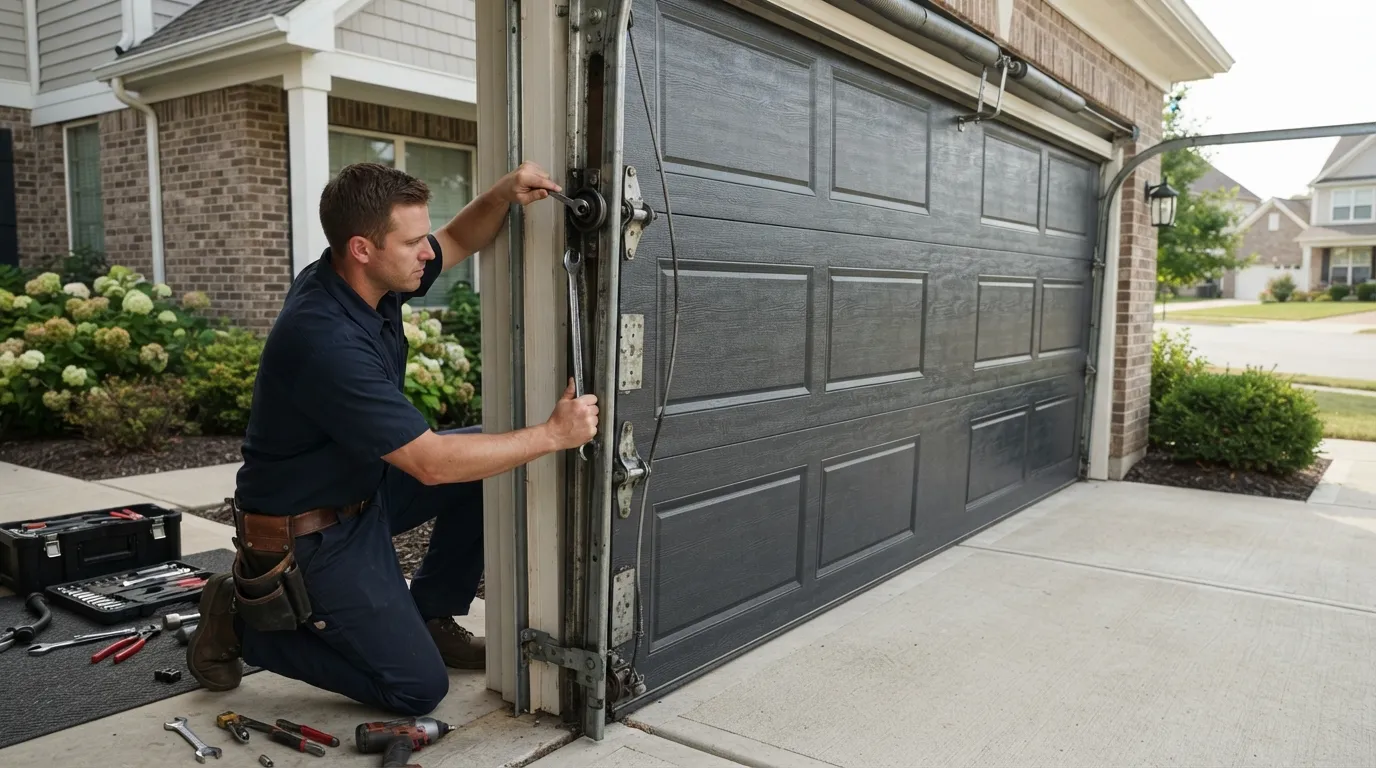
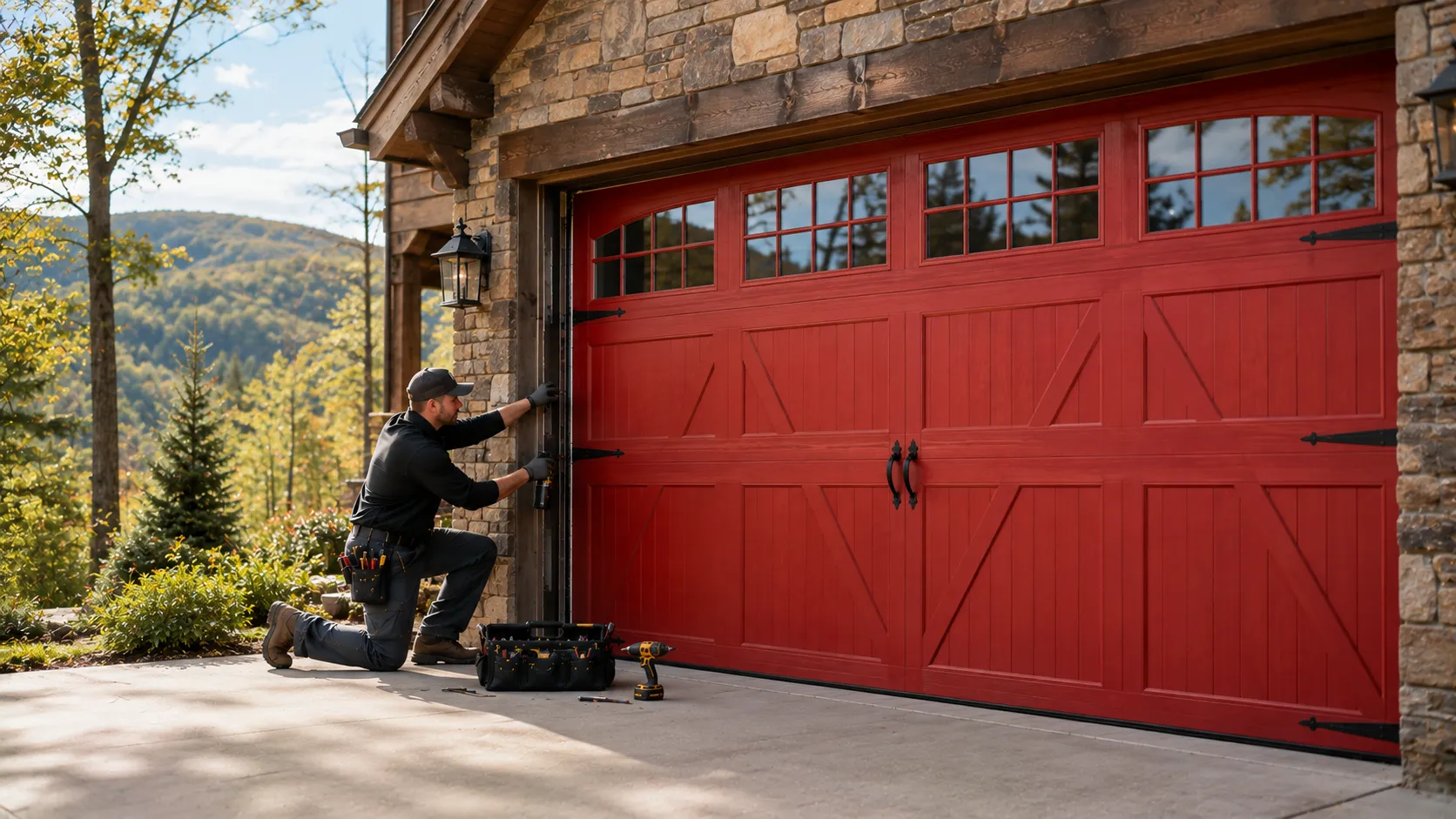
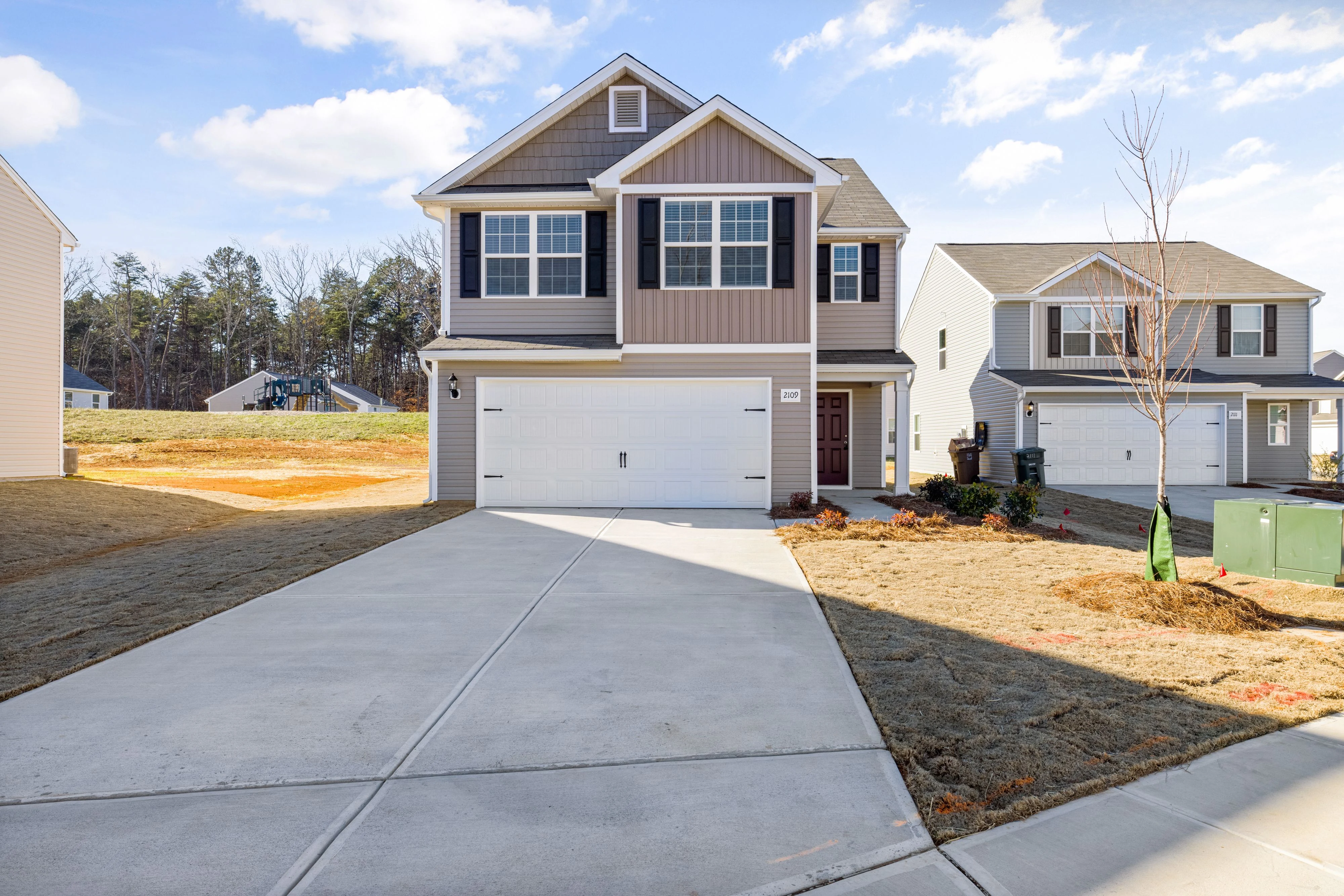
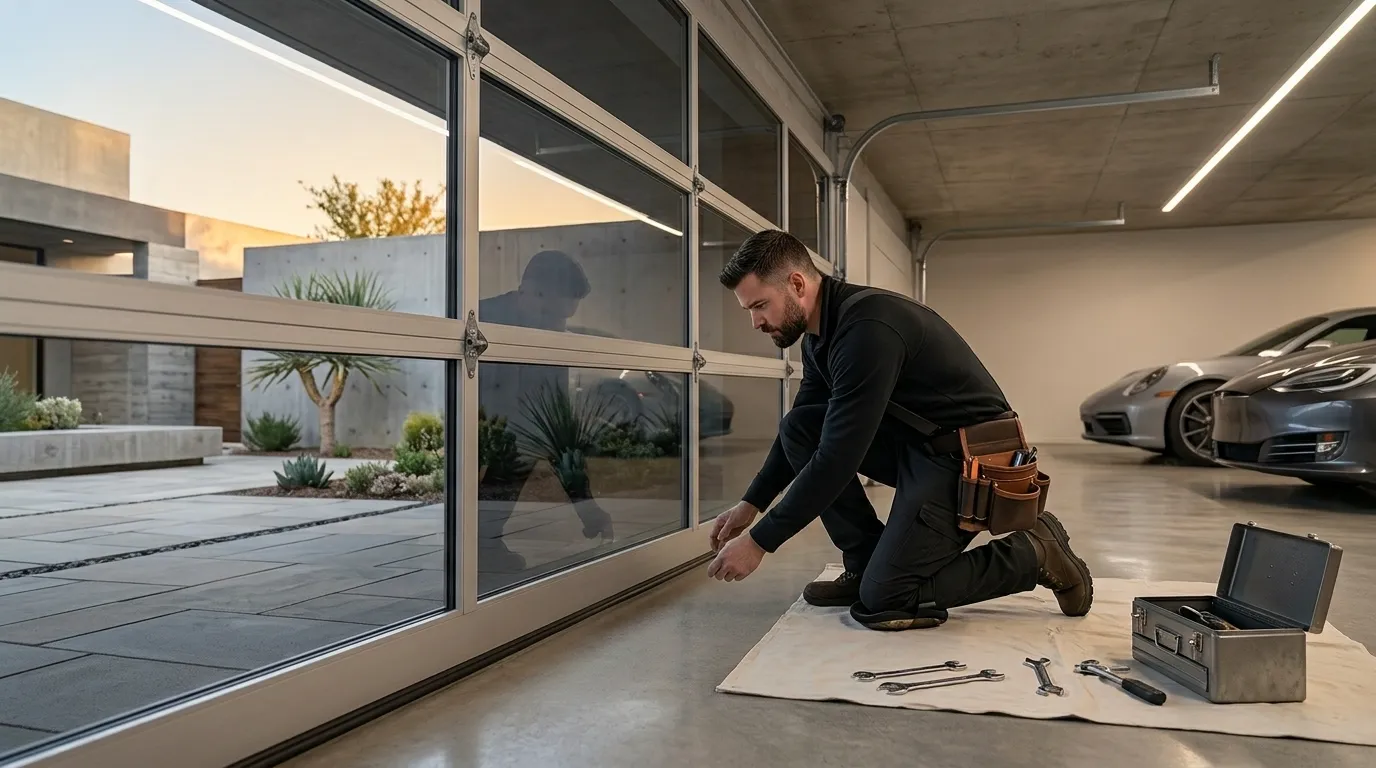
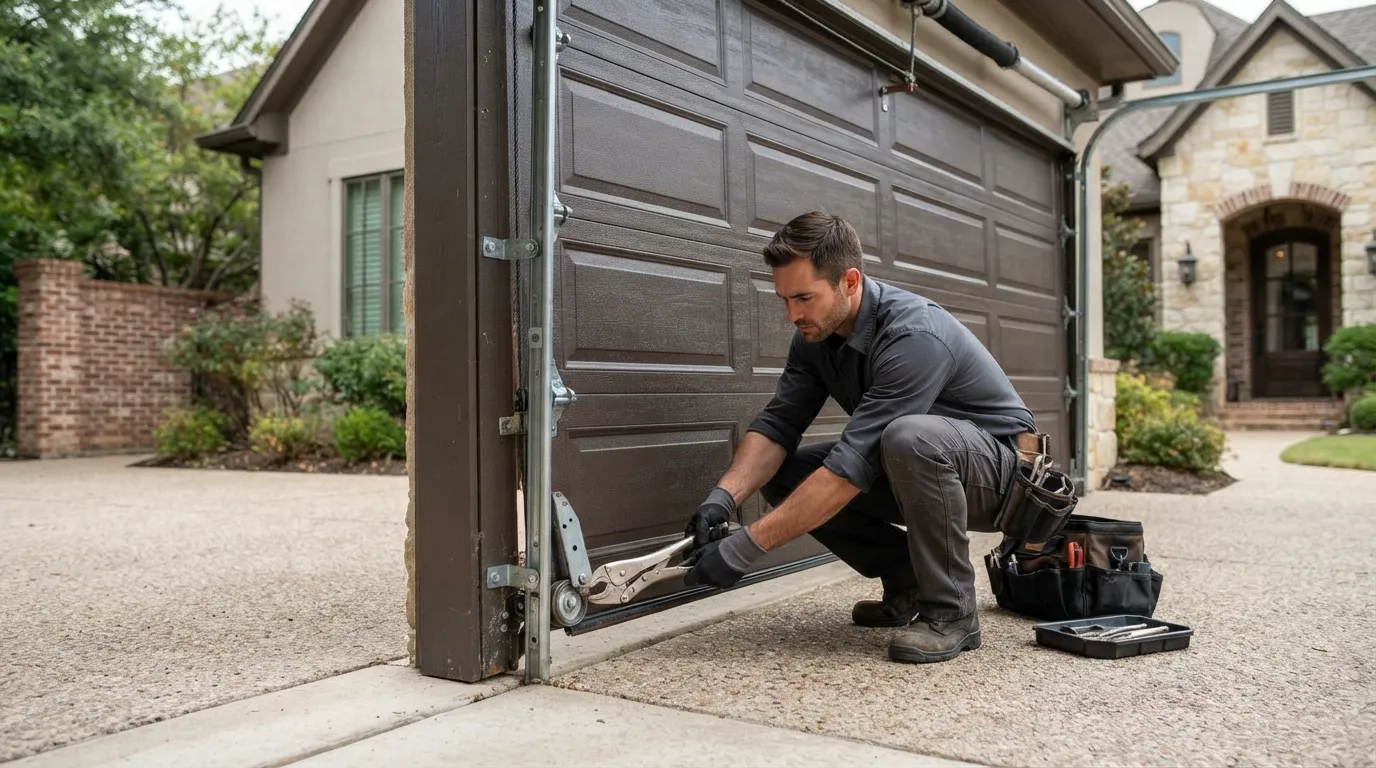
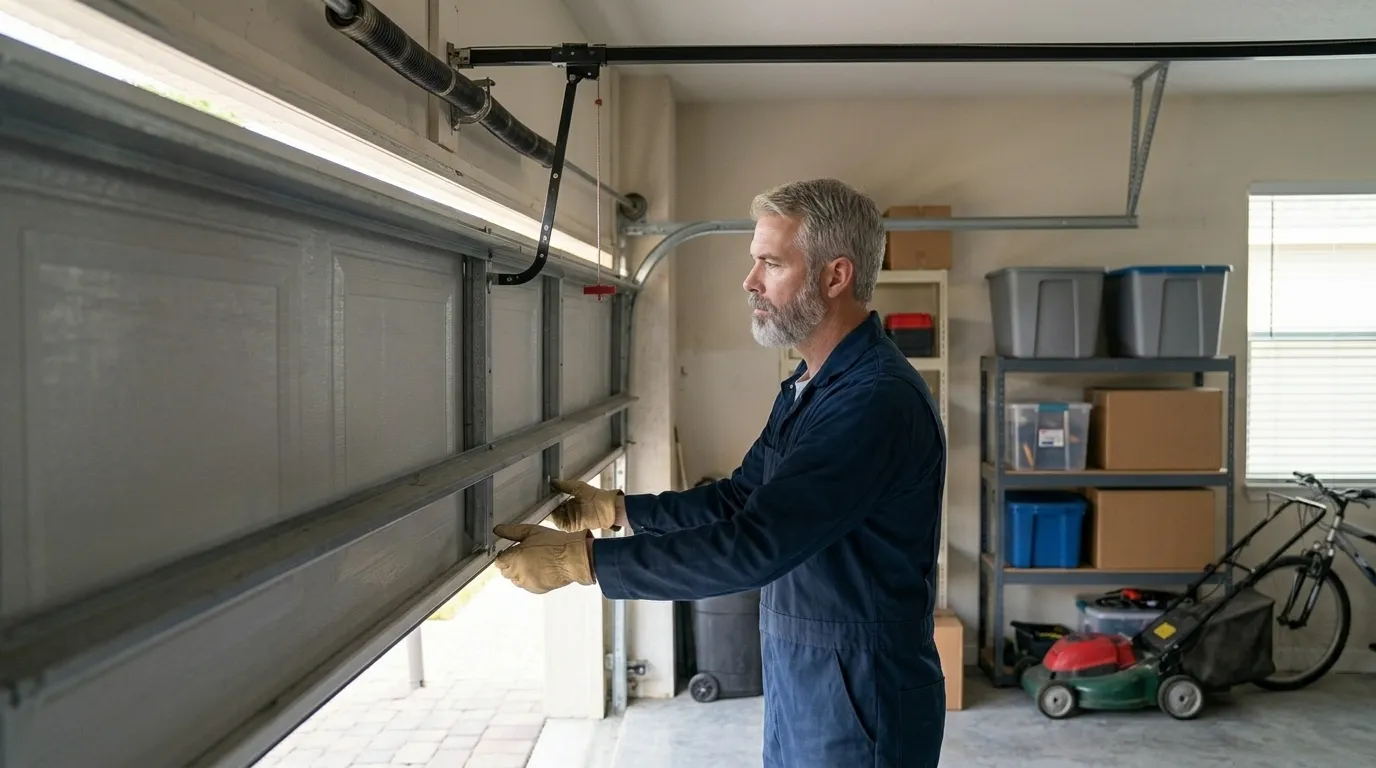
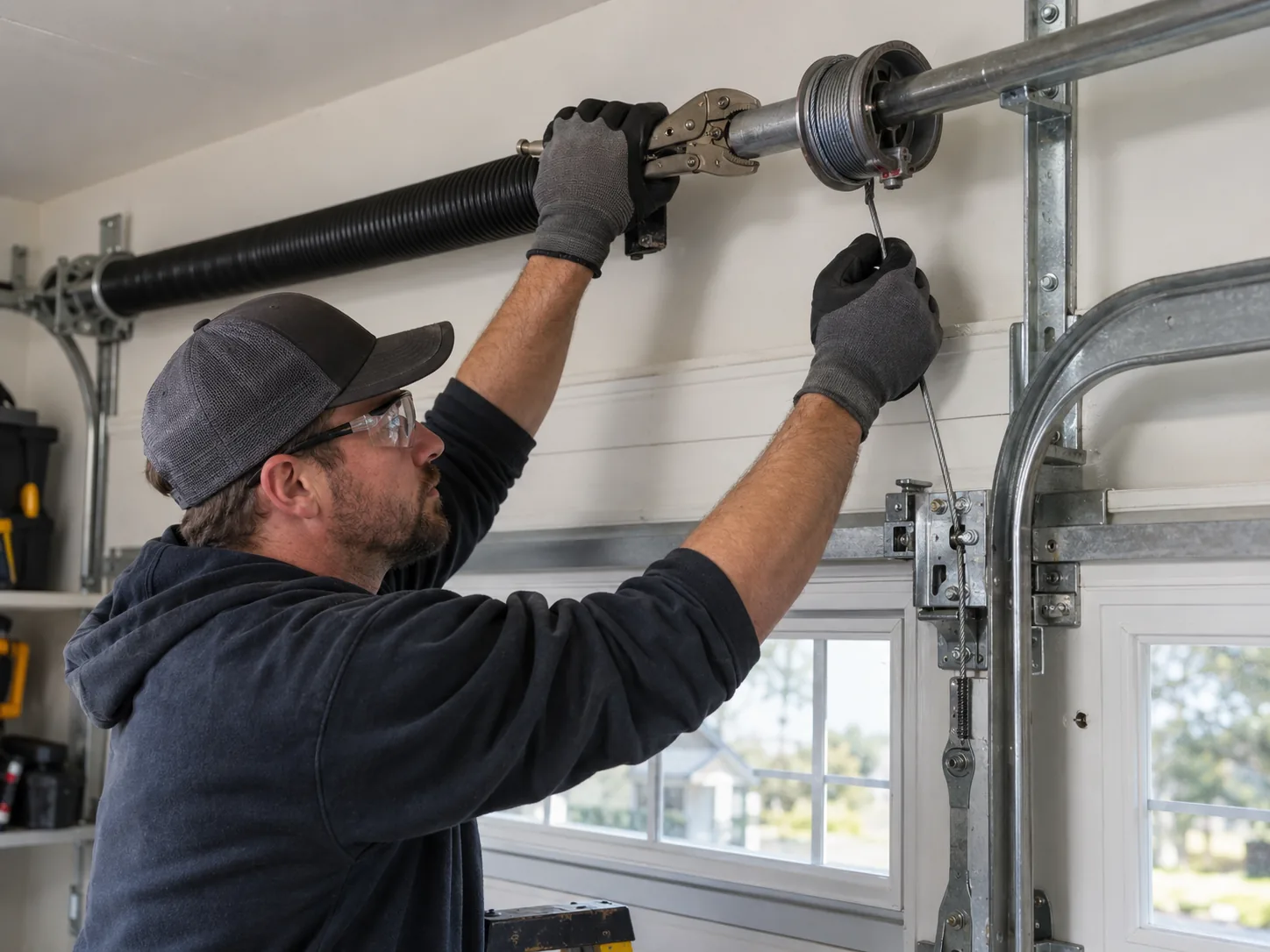
Most of the housing across this service area went up between 1975 and 2009, with the median build year landing around 1984. That means a huge share of the doors we get called on are original or close to it - torsion springs rated for roughly 10,000 cycles that have quietly aged past their useful life, galvanized cable that's starting to fray at the drum, and nylon rollers that have gone brittle from age rather than rust.
That last part matters because of the climate here. Temecula sits in a mild temperate band, so we don't see the rapid corrosion that coastal or humid regions deal with. Springs here don't rust through - they fatigue. The steel just gets tired from thousands of open-close cycles and lets go, often on a door that still looks fine from the outside. Heat cycling through the day also dries out lubricant faster than owners expect, which is part of why a door that was quiet in spring starts grinding by August.
Across the 20 named communities in this service area, the pattern repeats: 1980s and 90s construction, original hardware, and a spring or roller system that's now well past its rated life. It's not damage from weather events - it's straightforward mechanical wear on doors installed during the region's biggest building decades.