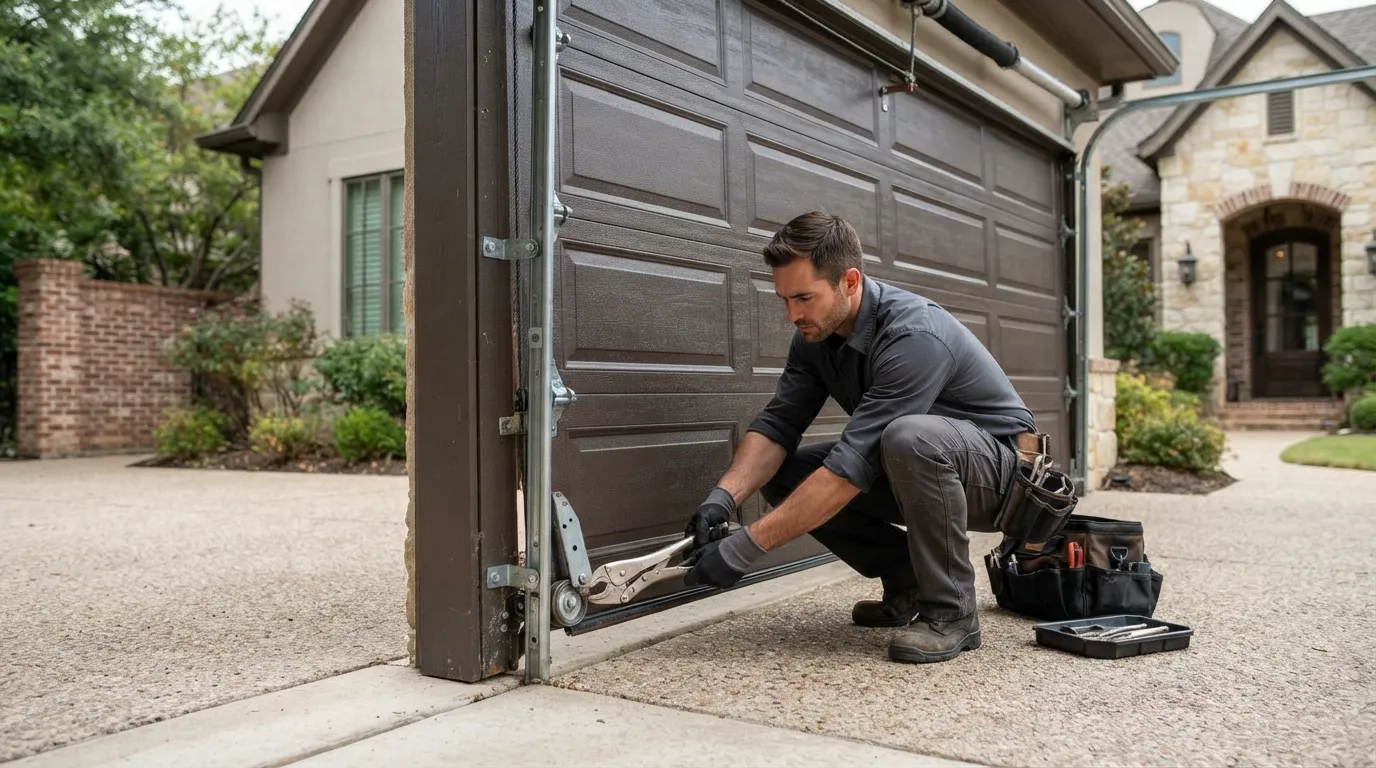
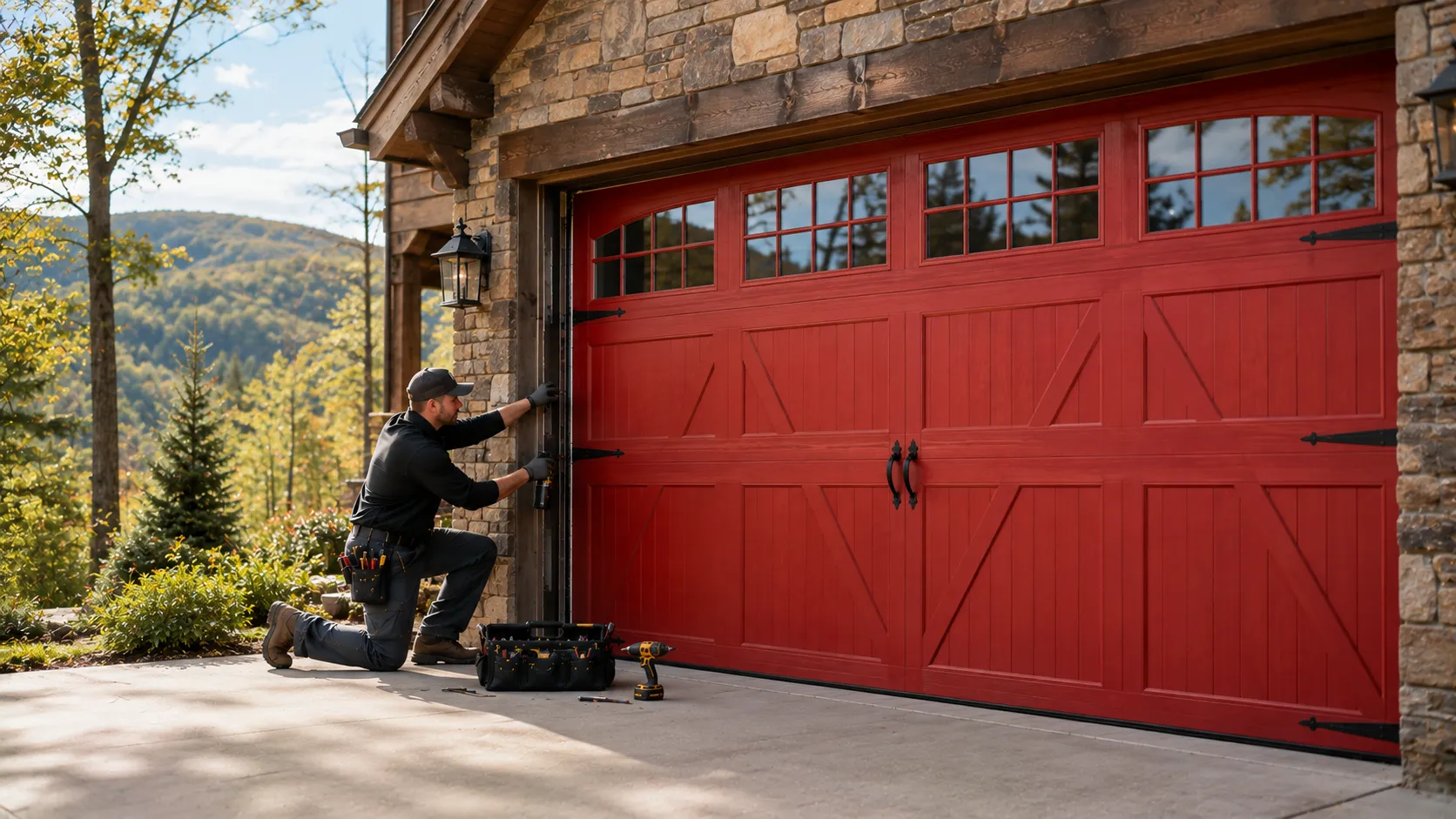
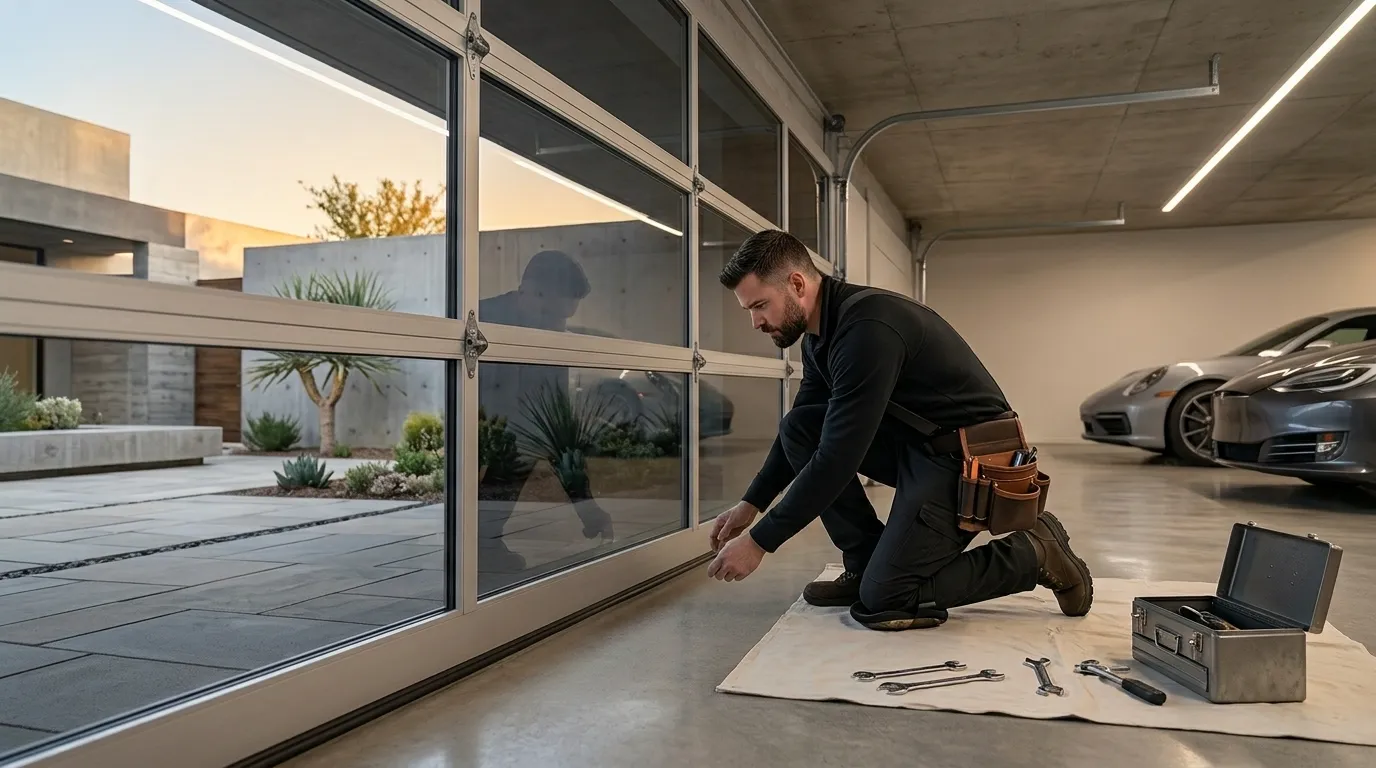
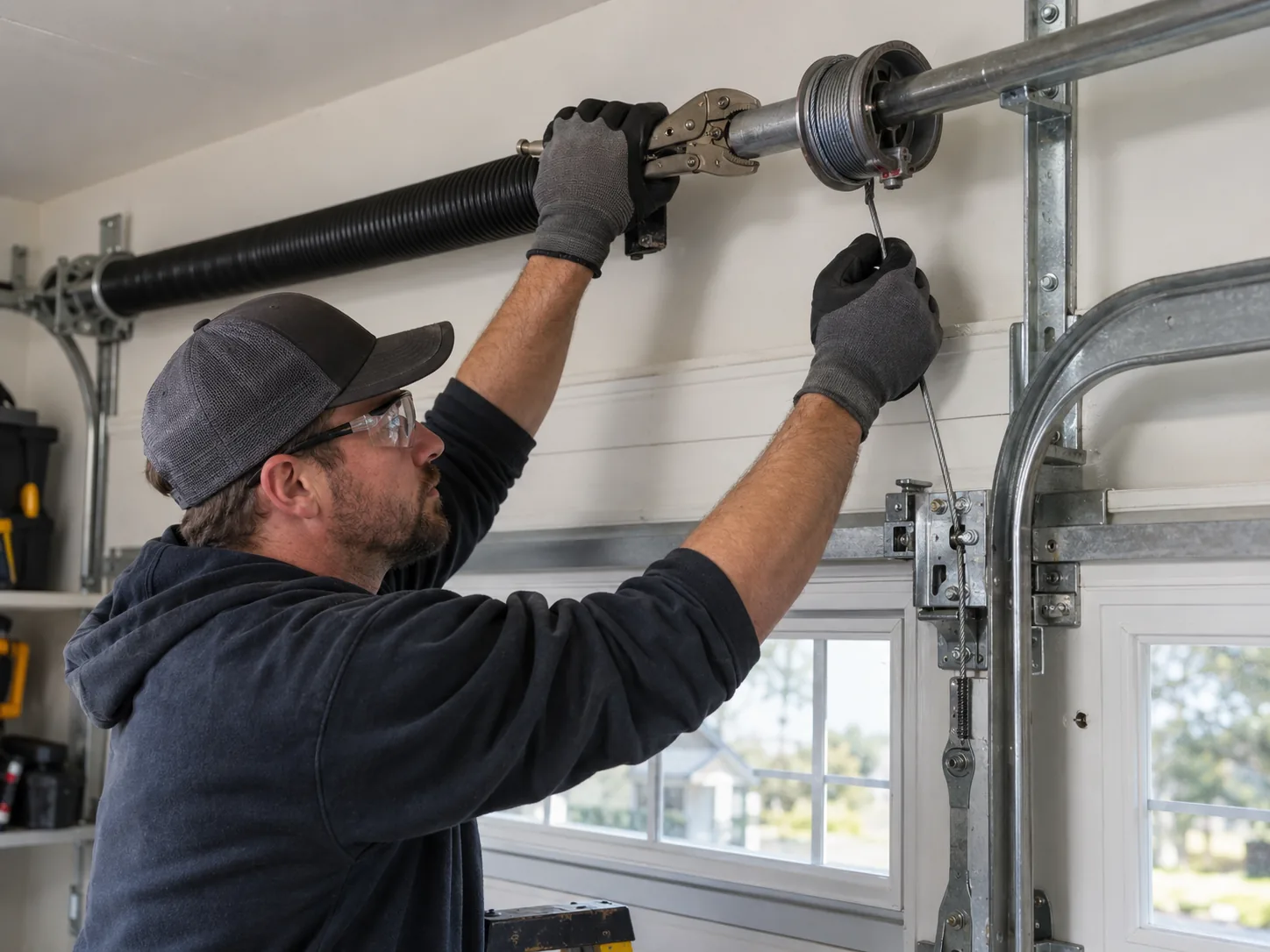
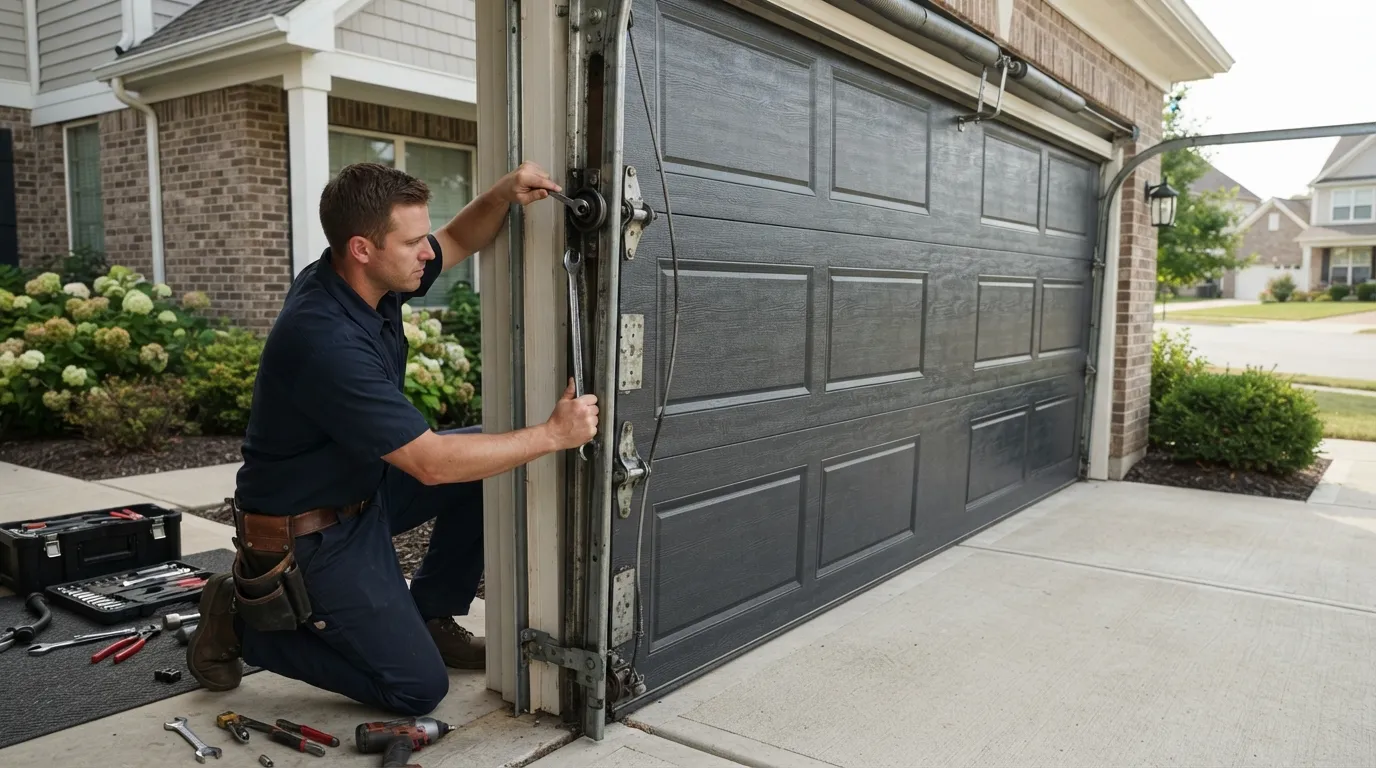
Most of the housing stock across this service area went up between 1975 and 2009, with a median build year of 1984, and the bulk of it sits in that 1980s-90s window. That means a lot of original steel rollers on steel track, installed once and never touched since. Steel-on-steel wears fast: the roller stem grooves out, the wheel flattens on one side, and the door starts to shudder instead of glide.
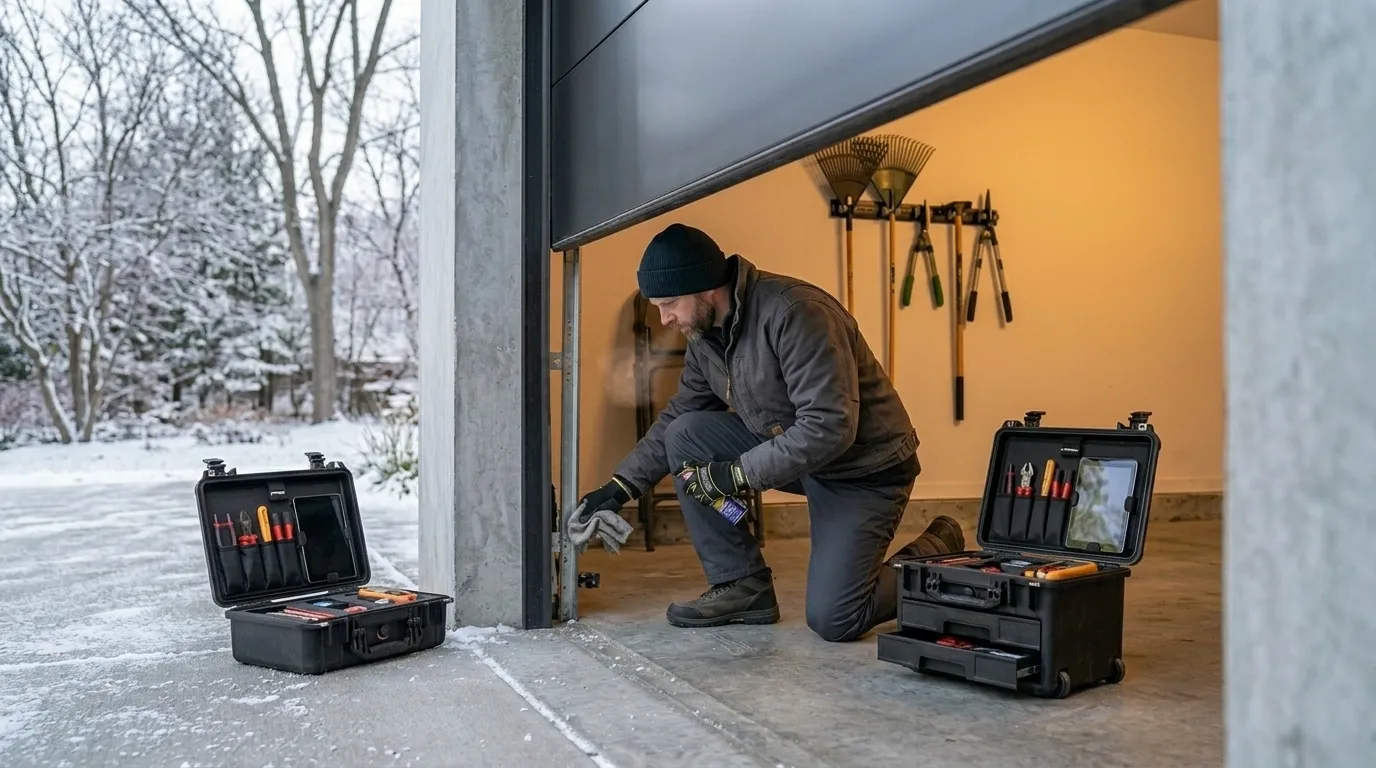
Temecula sits in a mild temperate band, so we're not fighting the freeze-thaw cracking or the wet-rot that ruins rollers in colder, wetter climates. What we fight instead is grit and dry heat cycling. Dust works into the roller bearing over the dry months, the grease dries out, and the nylon or steel wheel starts grinding rather than rolling. On a door that gets opened twice a day, that adds up over 20-plus years to a roller that's egg-shaped instead of round.
Houses from the earlier end of that 1975-2009 range are more likely to still have the builder-grade steel rollers rather than a nylon upgrade, and those are the doors we get called to most for this exact symptom - not because the door is broken, but because the rollers finally gave out.
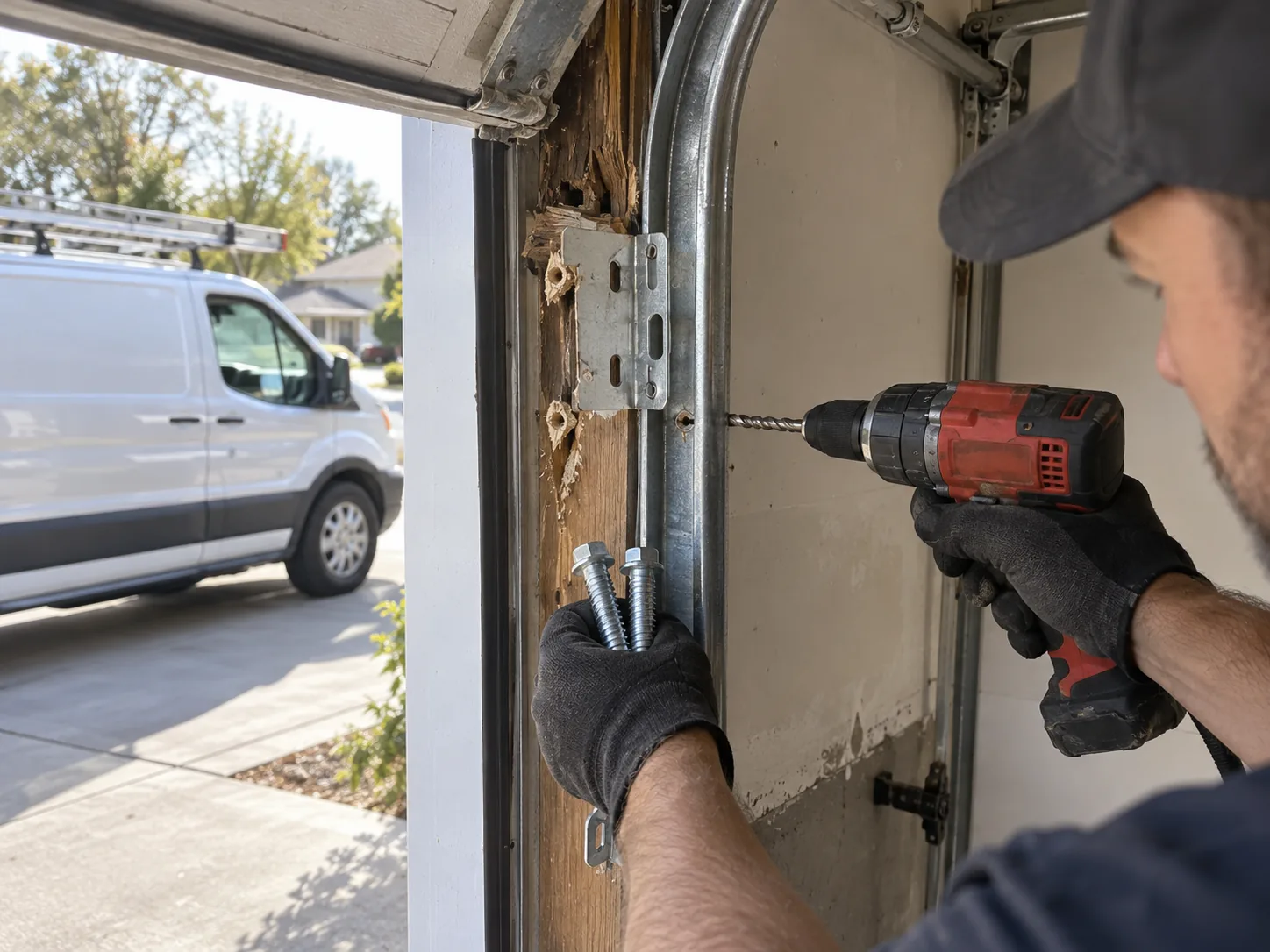
One honest note: if the track itself is bent or the rollers have been chewing into it for years, roller replacement alone won't fix the noise. At that point you're also looking at track work, and we'll tell you that up front rather than sell you rollers that won't solve it.