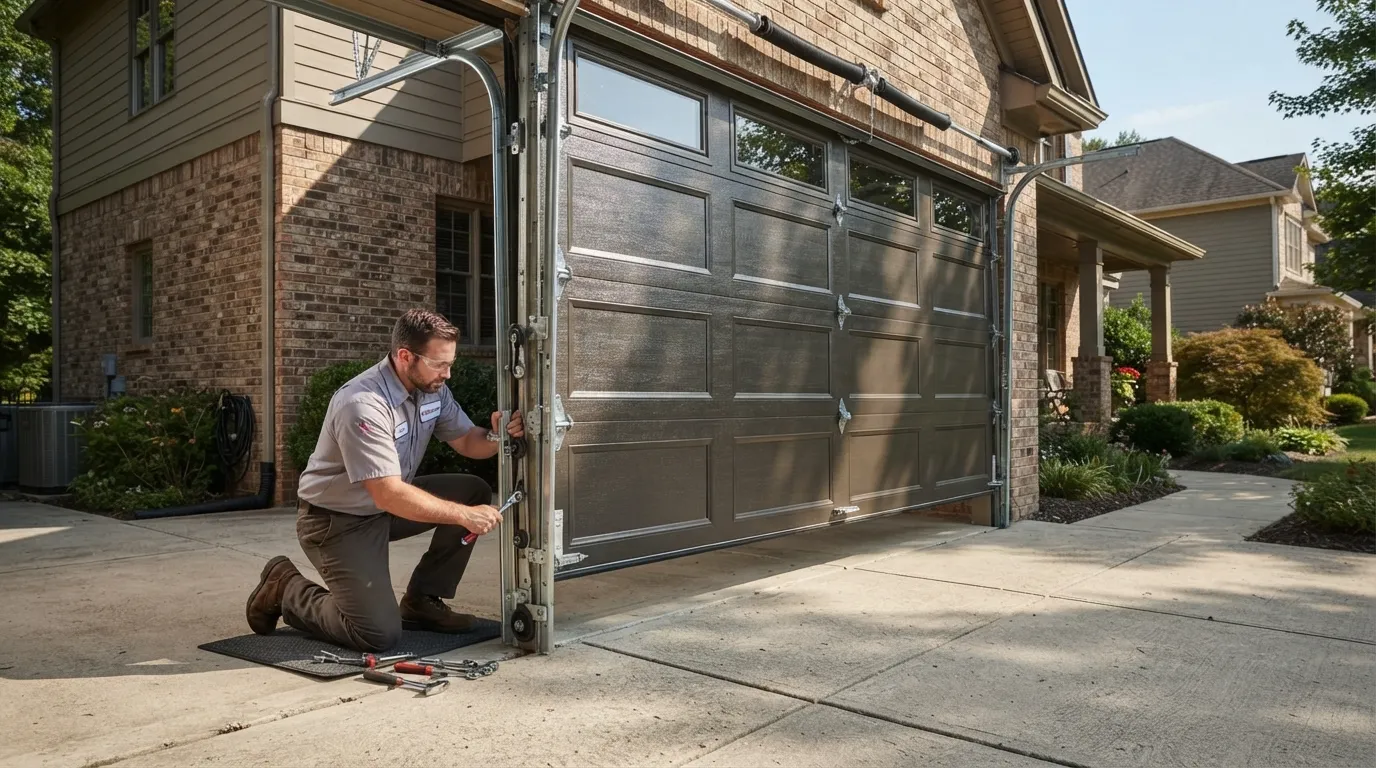
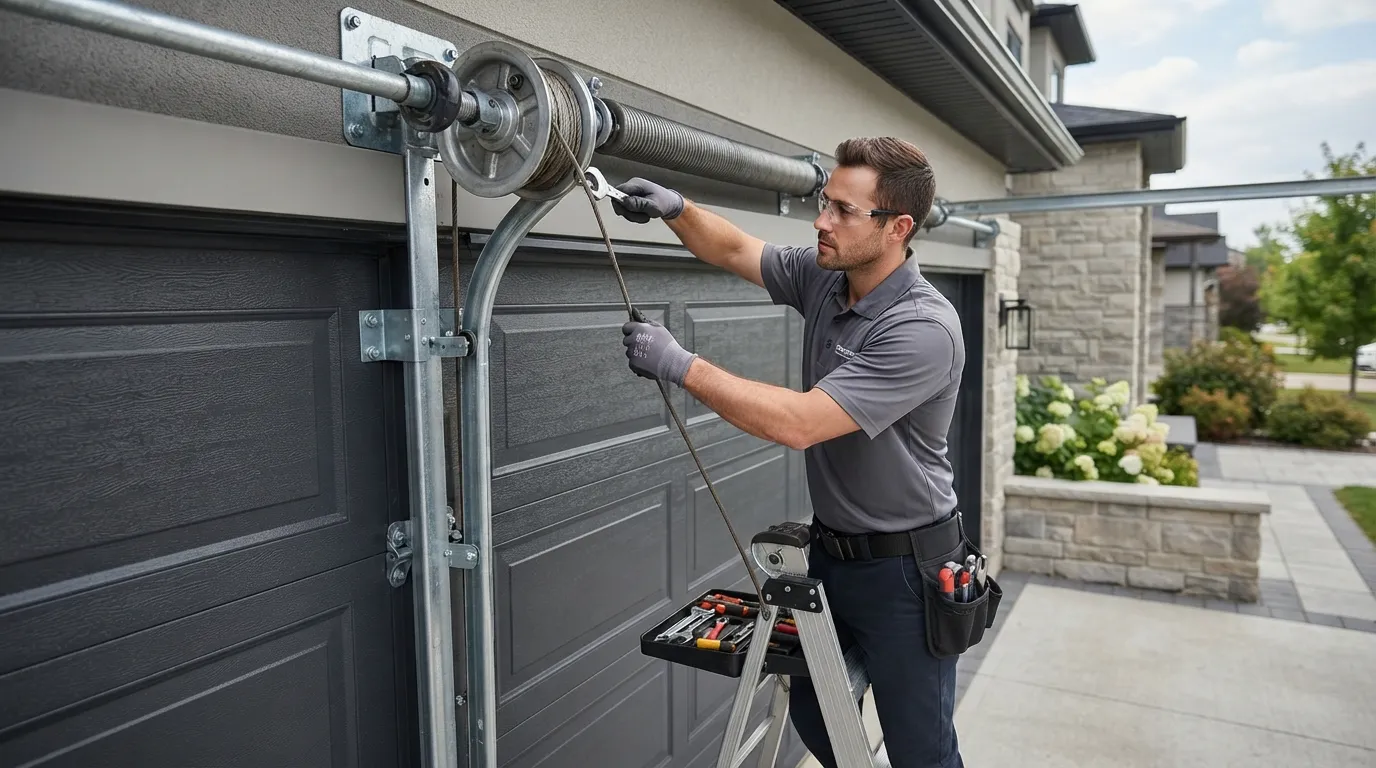
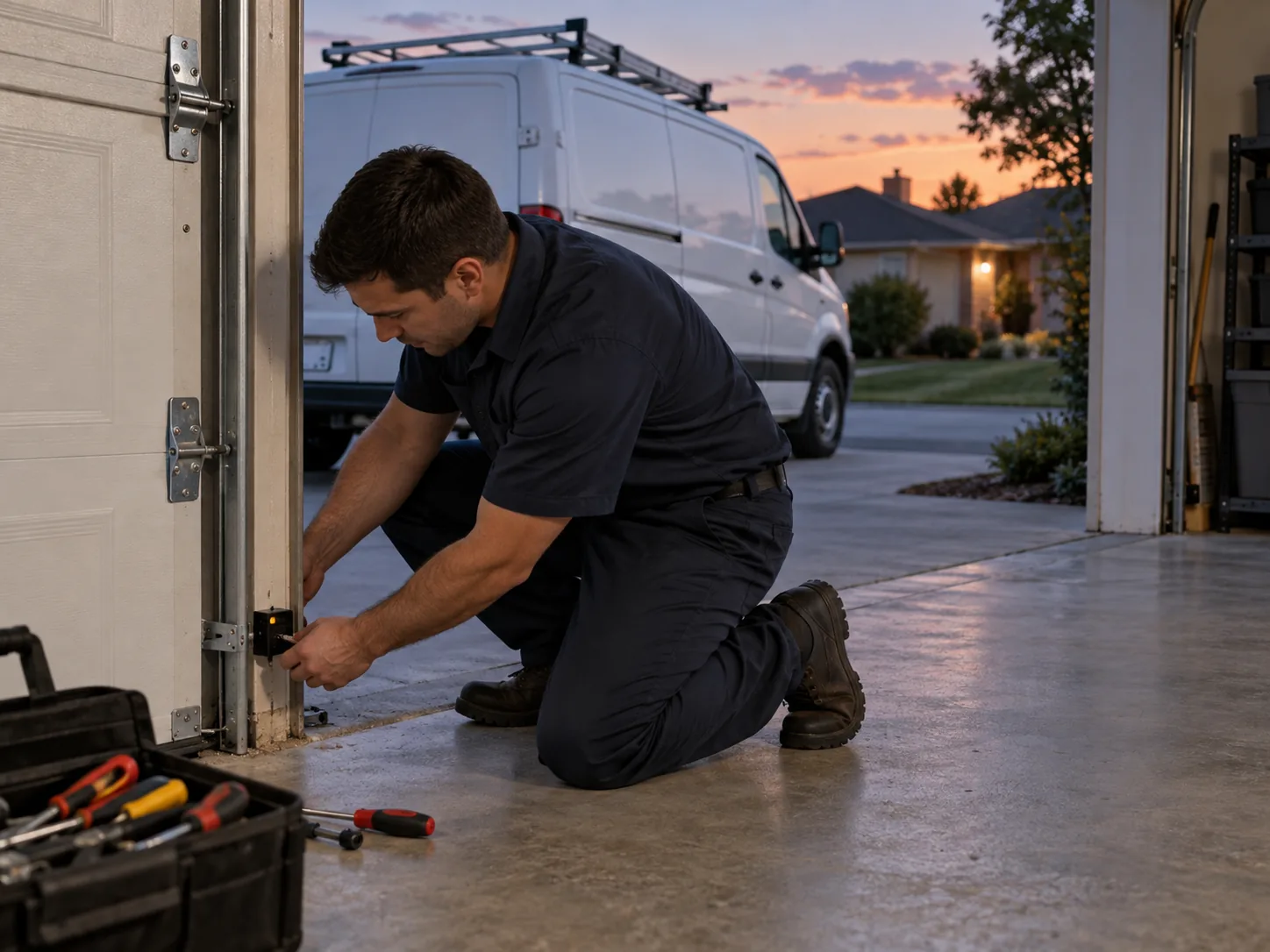
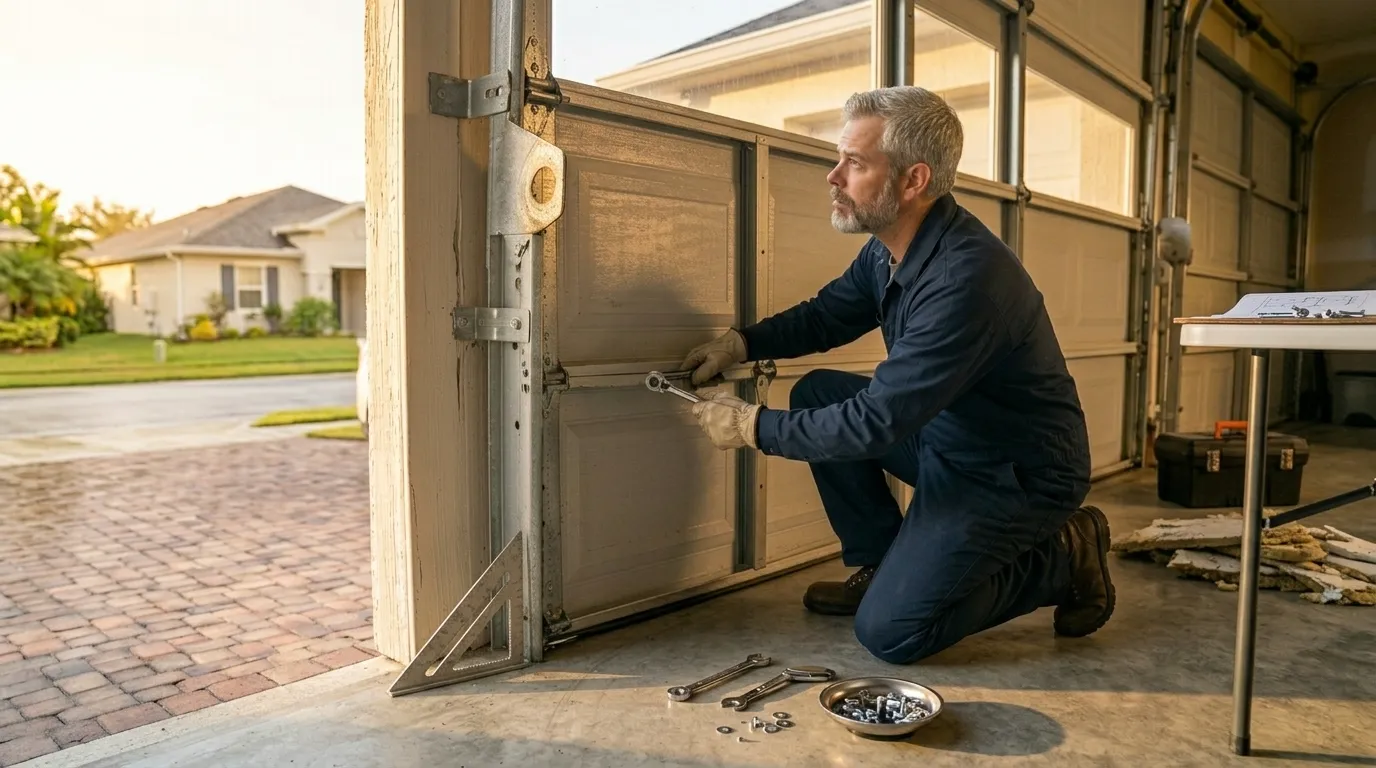
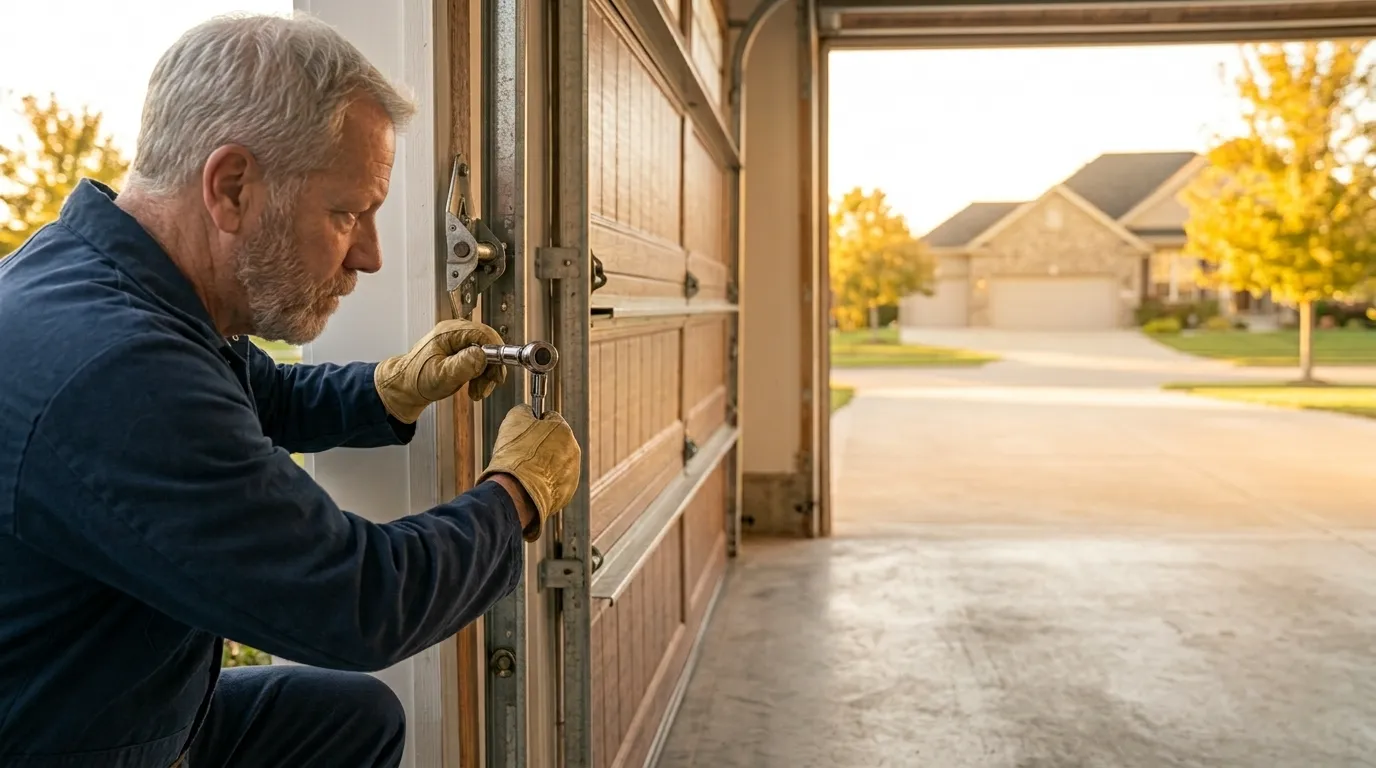
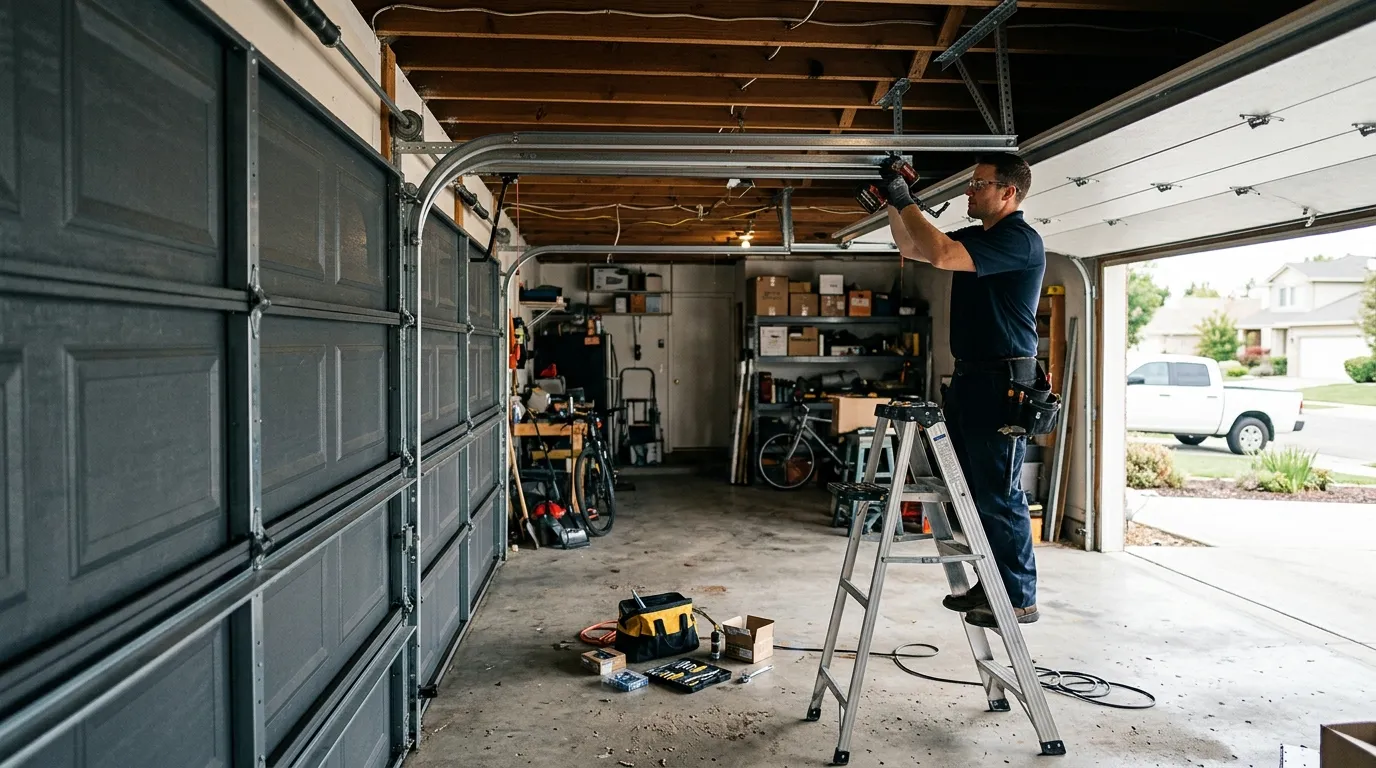
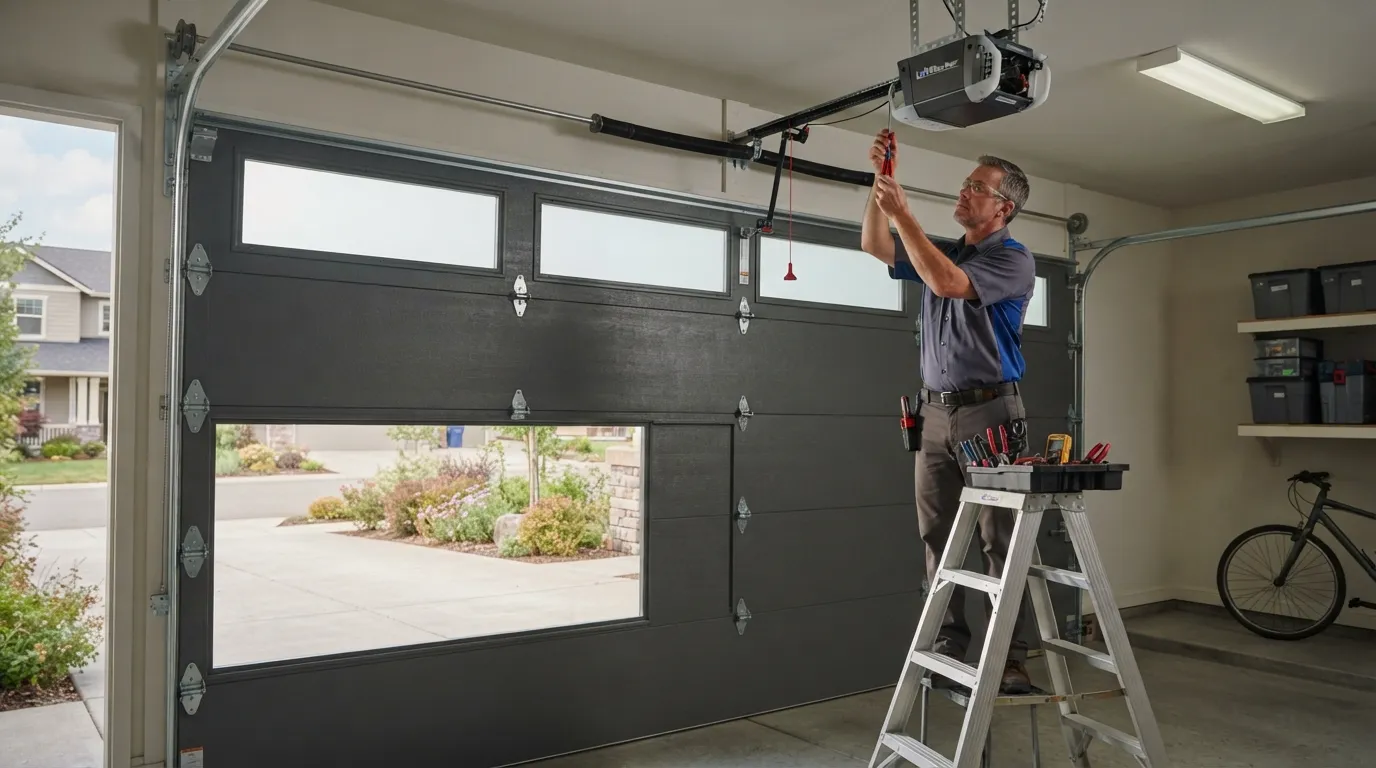
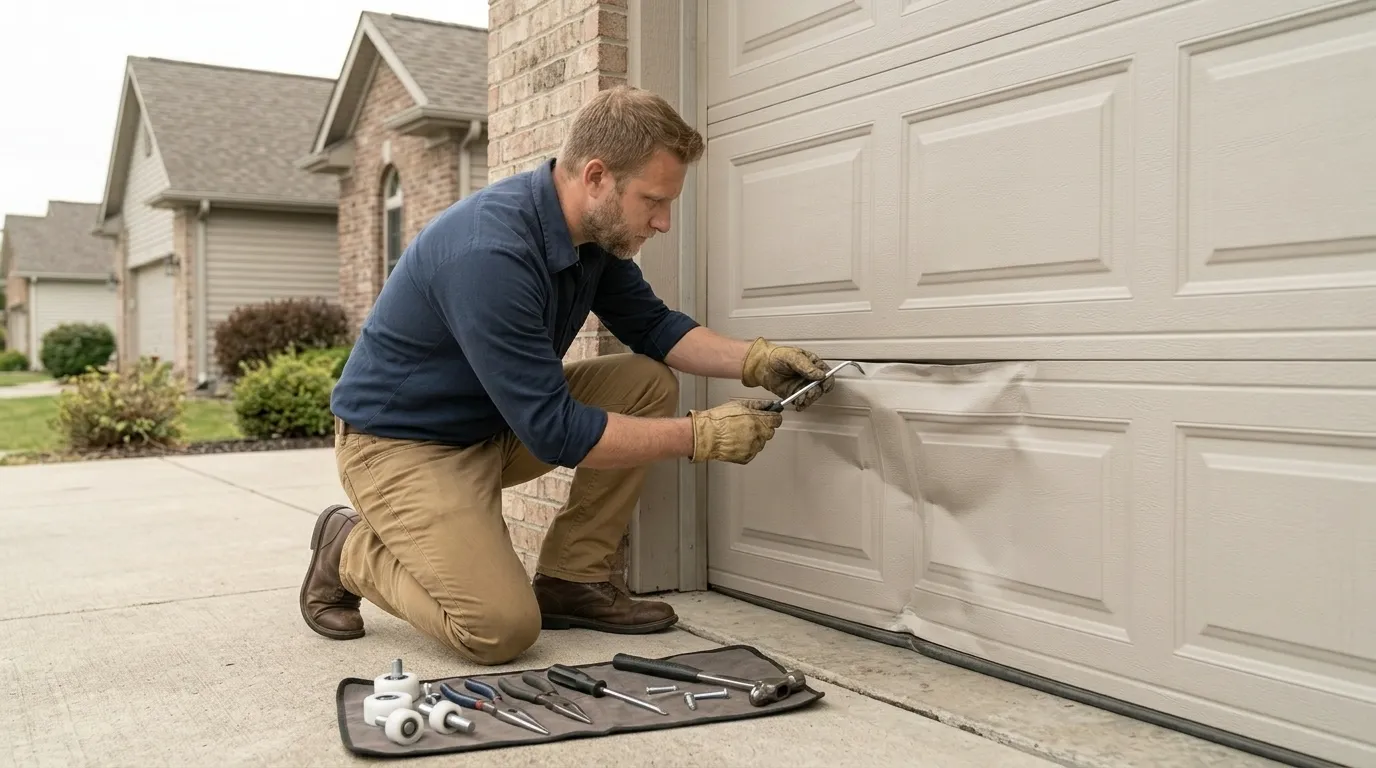
Lake Elsinore's housing stock centers on 2002, which puts a lot of doors here at roughly two decades of daily cycles on the original hardware. Builders in that era spec'd plain steel rollers with open bearings almost everywhere - they're cheap to install and nobody notices them until they're grinding. If your door has never been touched, there's a good chance those are still the rollers riding your track today, worn down from thousands of open-close cycles rather than any single event.
The service area sits in a mild temperate band, so you're not fighting the freeze-thaw cracking or extreme heat expansion that chews through hardware faster in harsher climates. That's actually good news here - it means when a roller fails on a 2002-built door, it's almost always plain wear, not a climate-driven track or spring issue layered on top. Dirt and dried-out grease in the roller stem do more damage over time than temperature ever does.
You'll usually hear it before you see it: a rhythmic squeak or a grinding rattle as the door travels, worse at the top or bottom of the run where the roller sees the most load. Left alone, a worn roller starts chewing up the track itself, which turns a small parts job into a track replacement.