
Guide
Garage Doors Built for Temecula's 1975-2009 Housing Stock
Temecula Garage Door Pros fixes and replaces doors on 1975-2009 area homes, tuned to mild-climate wear and double-layer insulation standards that came later.
Local detail
The Cost of This Job
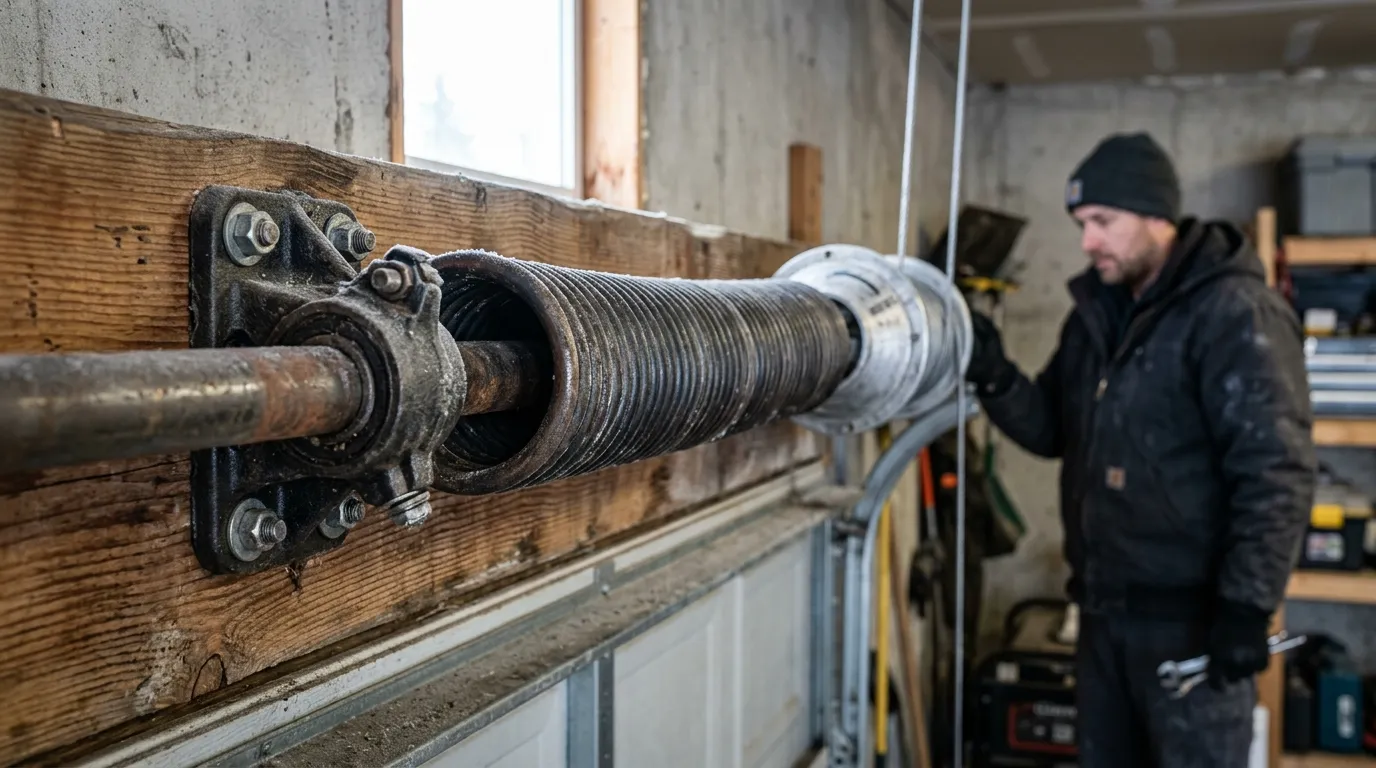
We can't quote you a number without seeing the door, because what drives the bill here isn't labor, it's the door itself. Most of the housing across this service area went up between 1975 and 2009, with the median landing in 1984, and that's a wide enough window to cover two very different kinds of doors. A house from the earlier end of that range often still has its original single-layer steel door, no foam, no thermal break, on the original torsion hardware. Those parts still work but they're heavier to service and the springs wear differently than on a lighter modern panel.
A house from the later end of the range, closer to 2009, usually already has a double-layer insulated door, and repairs there are mostly opener, sensor, or roller work rather than spring and panel work. So the honest answer is: tell us roughly when your section of the neighborhood was built and we can narrow it down over the phone, but we're not going to give you a flat number until we've looked at the actual door in front of us. That's not a dodge, it's just how spring sizing and panel stock work.
The area
The Seasonal Bit
This area sits in a mild temperate band, which means we don't get the deep freeze-thaw cycles that crack rubber seals or seize up steel tracks the way a lot of the country does every winter. You're not going to lose a spring to a hard freeze here, and that's worth knowing if you've lived somewhere colder before. What you do get instead is heat cycling - long stretches of warm, dry days that expand and contract steel panels and dry out the weatherstripping on doors that were never built with insulation to buffer that swing.
On the older end of the 1975-2009 stock, the single-layer doors take the brunt of that, since there's no foam core to slow the temperature change down. The double-layer doors installed later in that window handle it better, simply because insulation works both ways - it keeps heat cycling from hitting the steel as directly. So the seasonal wear pattern here isn't about storms, it's about years of slow expansion and contraction on doors that were built before that mattered as much to code.
What we find
How Local Conditions Play In
We work across a wide stretch of communities, from Rainbow six miles out to Fallbrook and Pala at ten, Wildomar and Sage further past that, and out to Canyon Lake, Bonsall, Winchester, Aguanga, and the rest of the twenty areas that round out to East Hemet at twenty miles. Across nearly all of them the housing stock reads the same way - mostly 1980s and 90s construction, which puts the bulk of these doors squarely in the era after insulation standards started showing up but before double-layer became automatic on every build. With 79,883 households and 47,581 owner-occupied houses across the service area, and a median household income of $88,879, replacing a door instead of patching it together is usually a real option here, not a stretch.
That matters because a lot of the repair calls we get aren't emergencies - they're a homeowner deciding whether a 20-year-old single-layer door is worth saving or worth swapping for something insulated. Given the income and ownership numbers here, more people land on replacement than in areas where that math doesn't work the same way.
How we work
What Is Going On
The short version: your garage door's age tells us more than its symptoms do. Homes built in the earlier part of the 1975-2009 range, before insulation rules tightened, typically got single-layer steel doors - thin panels, no foam core, hardware sized for a lighter but less forgiving door. Those doors dent easier, rattle more, and put more strain on springs sized decades ago for a door that's since sagged or warped slightly.
Homes built later in that same range usually came with double-layer insulated doors from the start, and those tend to fail differently - openers and sensors more often than springs and panels. When a call comes in, the first thing we're trying to figure out isn't the brand or the noise, it's roughly where that door sits in this 1975-2009 window, because that tells us what's actually holding it together. One limitation worth saying plainly: if a door is far enough gone - warped track, rusted-through panel, a spring system that's been rebuilt twice already - we'll tell you replacement is the better call rather than billing you for another patch repair.
Questions
Common questions
Why does the age of my house matter for a garage door repair?
Because most homes in this area were built between 1975 and 2009, and that range spans a real shift in door construction - from uninsulated single-layer steel to double-layer insulated panels. The era your house falls in tells us what kind of door and hardware we're likely dealing with before we even see it.
Does Temecula's climate cause garage door problems?
Not in the way cold-climate towns deal with frozen springs. This area sits in a mild temperate band, so the wear here comes from repeated heat cycling on older, uninsulated doors rather than sudden freeze damage. Older single-layer doors feel that more than newer insulated ones.
Should I repair my old single-layer door or replace it?
If it's from the earlier end of the 1975-2009 housing stock and still uninsulated, replacement often makes more sense once springs, rollers, or panels start failing together. Given typical household income levels in this area, replacement is usually a workable option rather than a financial stretch.
Do you serve areas outside Temecula proper?
Yes, we cover a wide radius including Rainbow, French Valley, Fallbrook, Pala, Wildomar, and other nearby communities out to about twenty miles. Call and tell us where you're located and we can confirm.
Ready when you are
Need a garage door sorted in Temecula?
Temecula Garage Door Pros repairs and installs garage doors, springs and openers in Temecula, CA and the surrounding area.