Rainbow, Temecula

Emergency Garage Door Repair for Rainbow, CA

Rainbow's houses mostly date to 1976, which means older extension-spring setups still failing today. We roll out from Temecula, 6 miles away, for stuck or broken doors.

Emergency Garage Door Repair for Rainbow, CA in Temecula
Serving Temecula, CABackground-checked techsHonest, upfront pricingFast local response

DIY or pro

Doing It Yourself

Rainbow's homes mostly went up around 1976, and doors from that era usually run on extension springs mounted along the horizontal track rather than the torsion springs you'd find on newer builds.

Extension spring tension danger

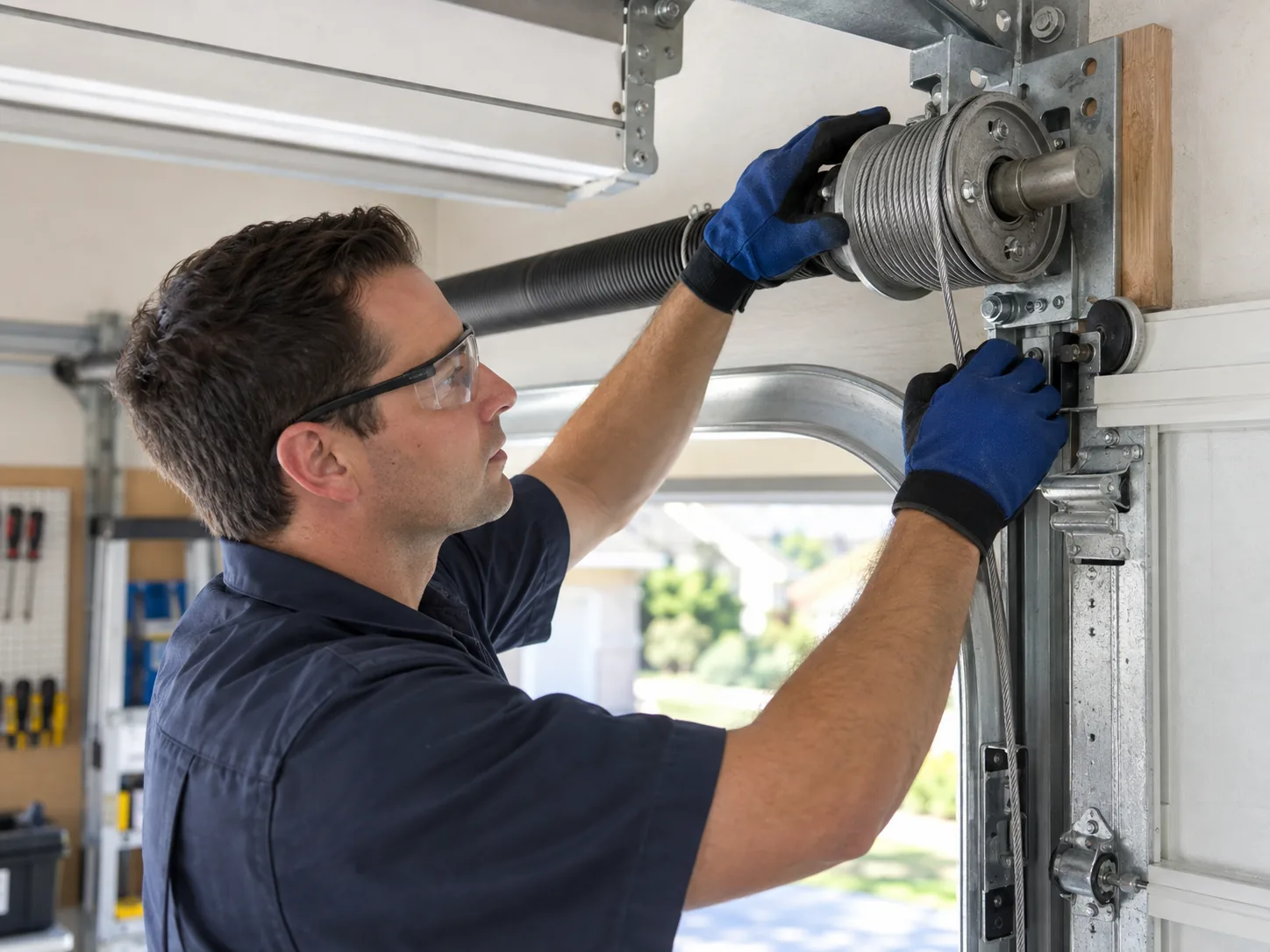
That matters if your door is stuck: extension springs are cheaper to buy but far more dangerous to touch under tension, and the safety cables that are supposed to catch a snapped spring often weren't added until later retrofits.

Safe diagnostic checks first

If a spring has let go, or a cable has come off its pulley, leave it alone. You can safely check a few things yourself first: make sure the wall switch or remote has power, look for a bent track rail, and check that nothing is blocking the photo-eye sensors near the floor.

Small-town limited service

If the door won't budge, or moves crooked, don't force the opener - that just strips gears or bends panels further. With 599 households in Rainbow, there isn't a garage door shop based here, so a call to Temecula gets a truck moving toward you rather than someone in town.

Local causes

What Causes It Around Here

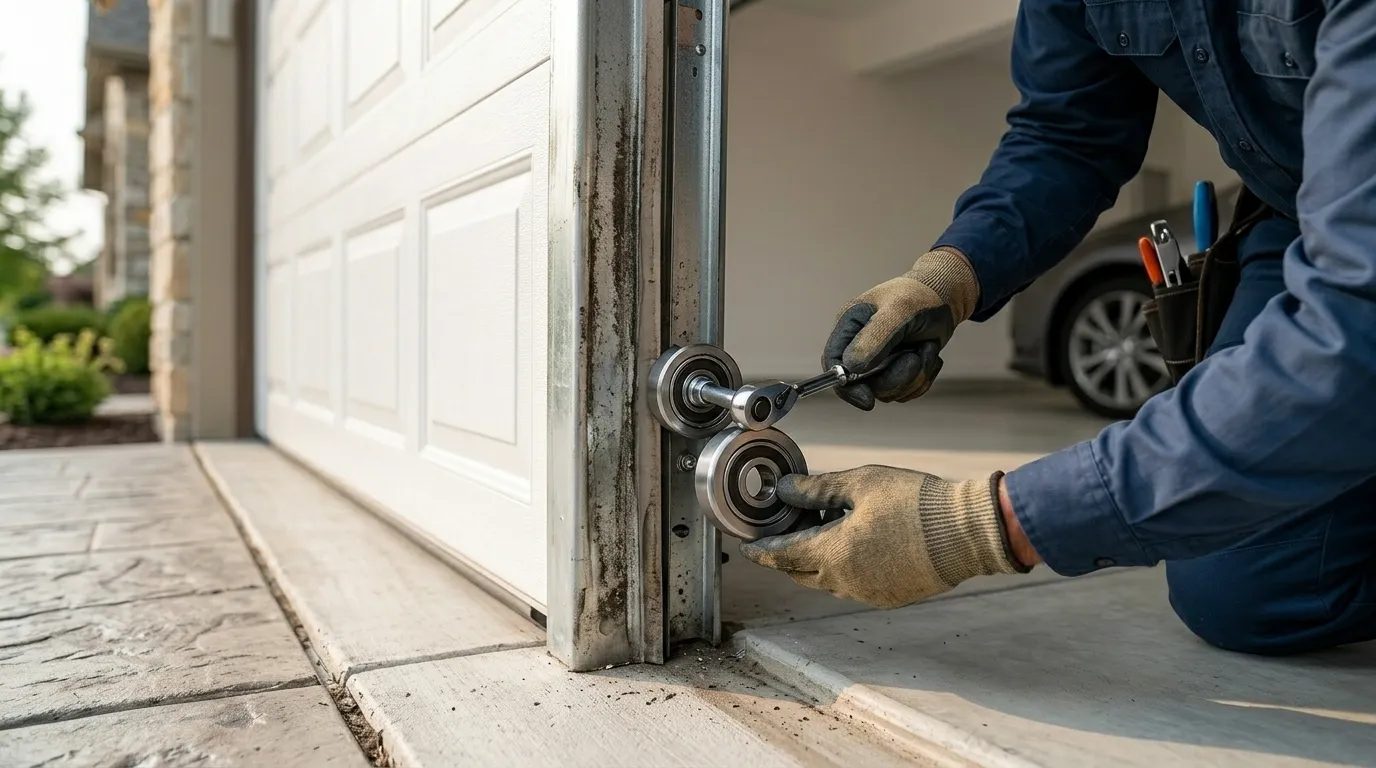
A door built in 1976 has had close to fifty years of open-close cycles on original or once-replaced hardware, and extension springs typically don't last that long without at least one failure. The mild temperate climate here is easy on doors compared to freeze-thaw regions, so rust and cold-snap cable snapping aren't the main culprits. What we see instead is fatigue: springs that have simply cycled past their rated life, rollers worn oval instead of round, and track brackets loosened by decades of vibration rather than storm damage. Because Rainbow's housing stock skews older than the broader service area's 1975-2009 range, a lot of these doors are on the early end of that window, meaning original steel is more likely and universal replacement springs are less likely to be a straight swap. Household income here runs close to the wider area's, but a bit under the region's $88,879 median, which is worth mentioning only because it shapes which repairs are worth doing versus which doors have earned a full replacement instead of another patch.

What Causes It Around Here

Warning signs

How It Shows Up

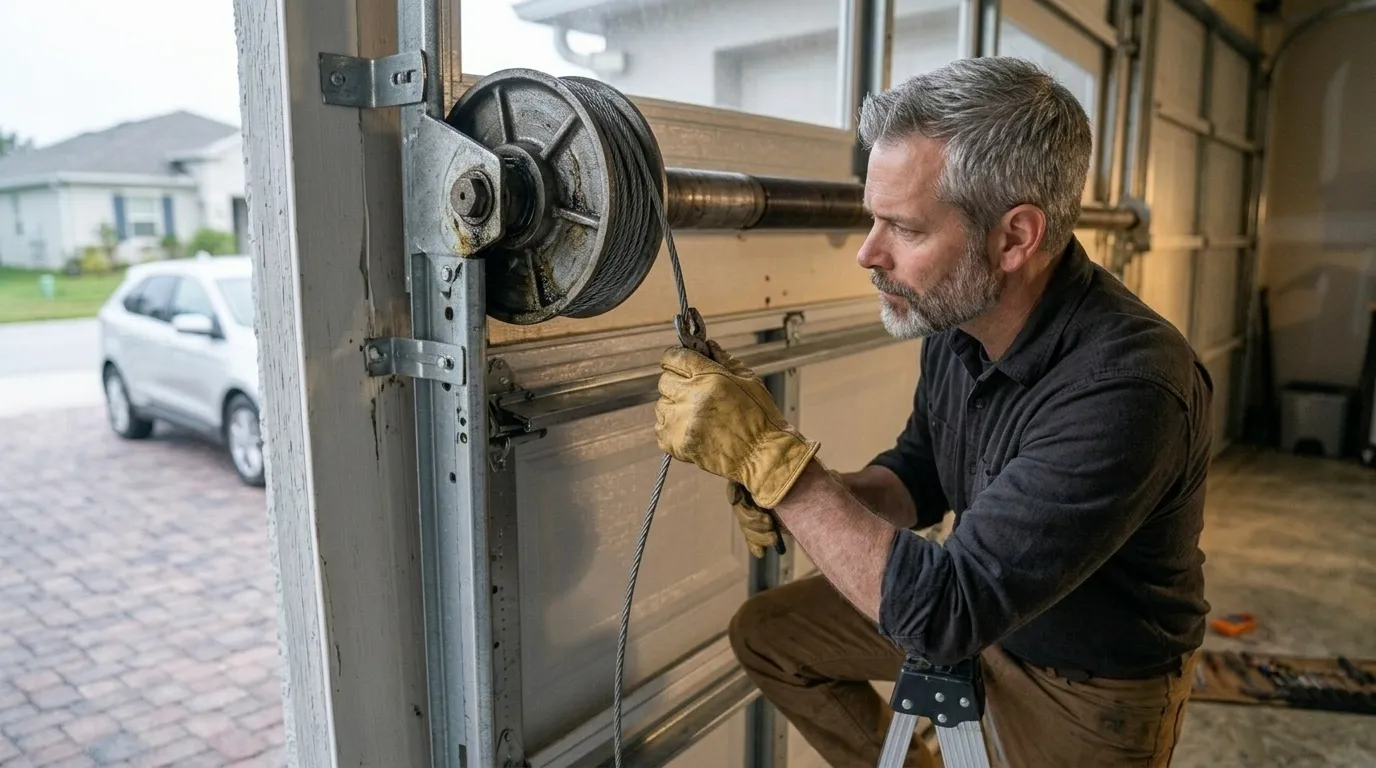
On a 1976-era door, the failure usually looks like one of two things: the door won't lift past a few inches because a spring has snapped and the opener is trying to muscle a dead weight, or the door comes down crooked because a cable has jumped its drum on one side while the other side still holds tension.

Spring failure noise signature

You might hear a loud bang from the garage before either happens - that's usually the spring letting go, not a break-in. Sometimes it's quieter: the opener runs but the door doesn't move, which points to a stripped gear or a disconnected trolley rather than the spring itself.

Non-foam panel binding

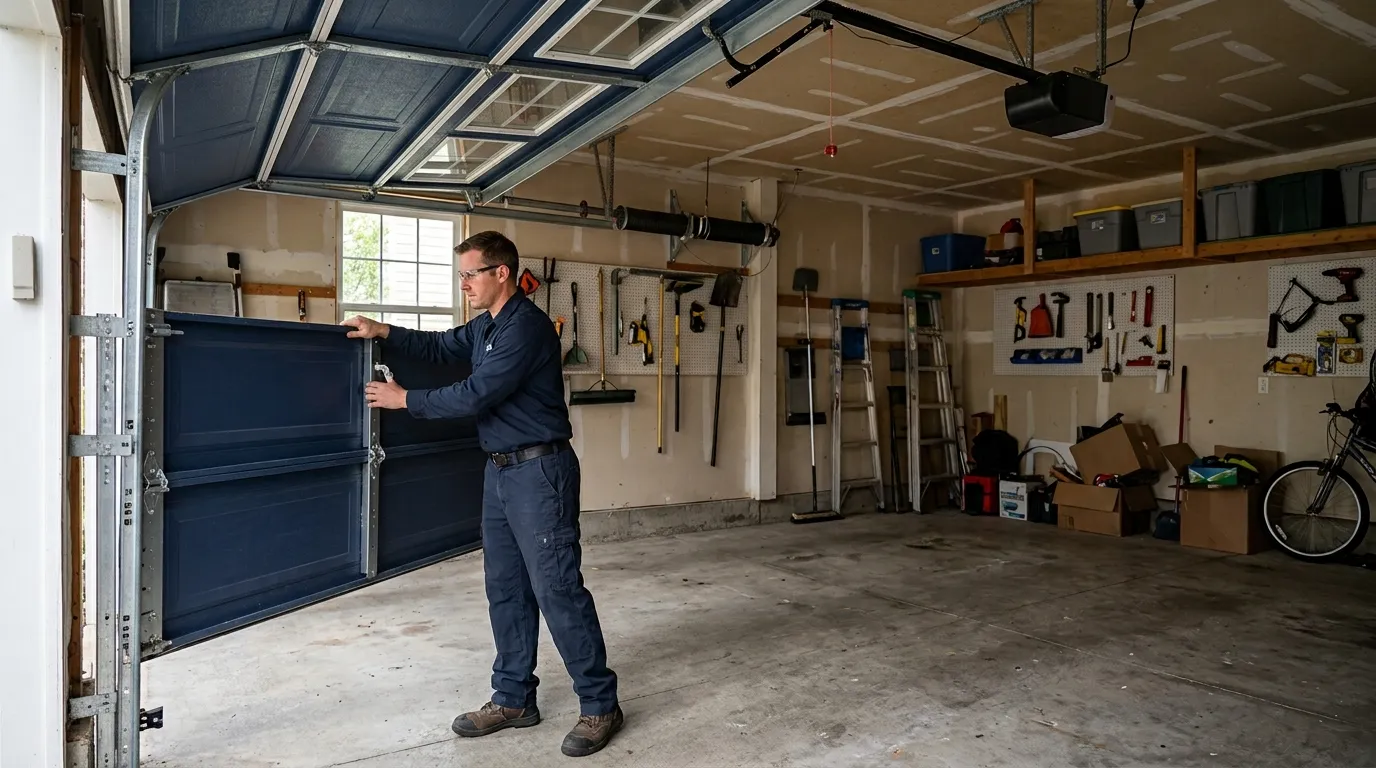
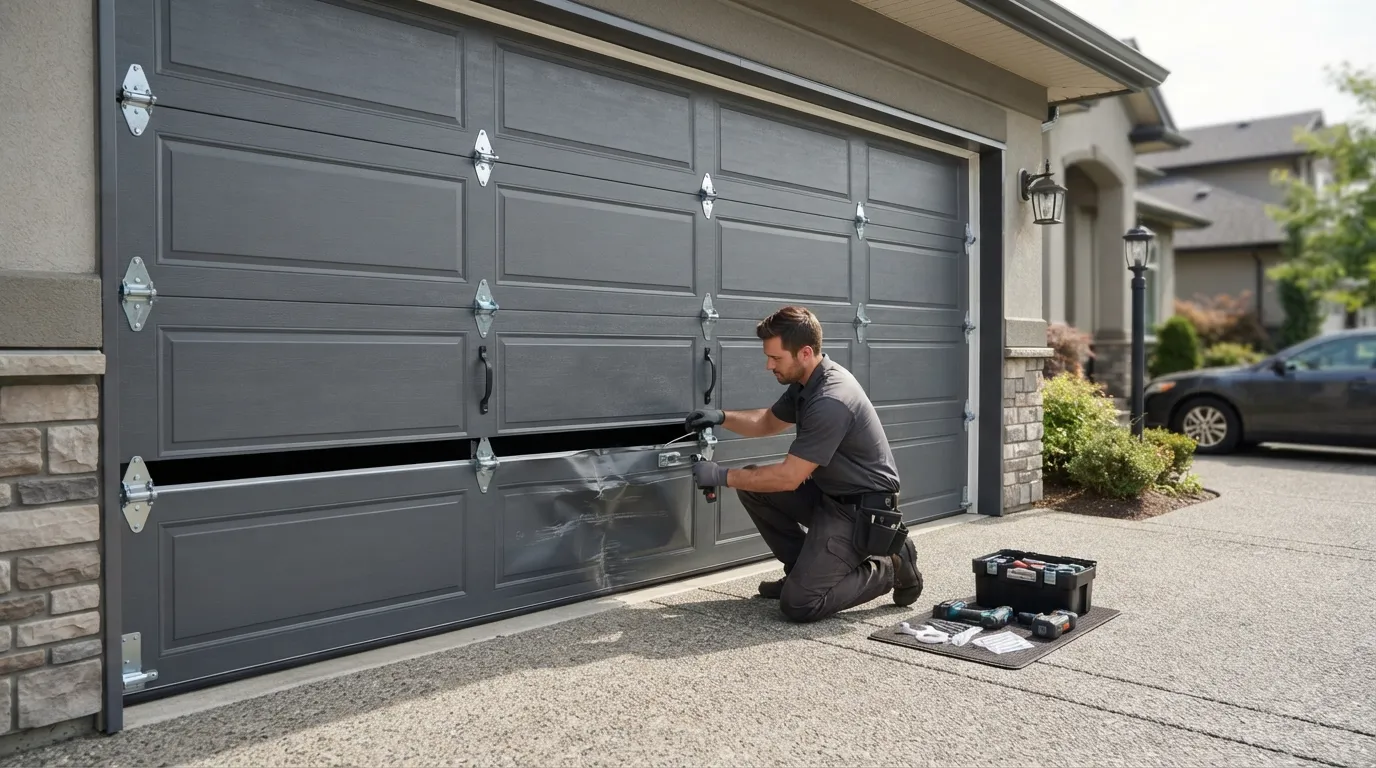
Panels on doors this old are more likely to be steel without foam backing, so a section that's dented or bowed from age can bind in the track well before the spring itself fails.

Neighborhood cohort failure patterns

None of this is unique to any one house in Rainbow, but it is common across a neighborhood built in the same handful of years, which is why we see the same handful of failures repeat block to block.

How Long It Takes

Timing

How Long It Takes

We come from Temecula, about 6 miles out, so travel time to Rainbow is short compared to some of the farther towns we cover. Once on site, a spring replacement or cable re-track on a standard residential door is usually a same-visit fix, assuming the part is a common size - which it often is on a door this age, since extension spring lengths were fairly standardized in the 1970s. Where it takes longer is when the track itself is bent beyond adjustment or the door has a less common panel width, in which case we may need to order a part rather than carry it on the truck. We're upfront when that happens rather than promising a fix we can't deliver that day. We don't stock every obsolete part for every original 1970s door, and if yours needs one, we'll tell you that up front instead of guessing.

Questions

Common questions

Do you have a shop or truck based in Rainbow?

No. We're based in Temecula, about 6 miles away, and drive out to Rainbow for calls. There's no local depot here, which is normal for a town of Rainbow's size - about 599 households - but it does mean travel time is part of the job, not extra on top of it.

Why do so many Rainbow garage doors use extension springs instead of torsion springs?

Rainbow's housing mostly dates to around 1976, and extension springs mounted along the horizontal track were standard residential hardware at that time. Torsion springs became more common in later decades. If your door still has its original hardware, extension springs are what you're likely dealing with.

Is it worth repairing a door this old or should I replace it?

It depends on the door, not the age alone. A snapped spring or worn cable is usually a straightforward repair even on a 1970s door. But if the panels are dented, the track is bent, or parts are hard to source, replacement can end up cheaper than repeated patch jobs. We'll tell you honestly which situation you're in.

Ready when you are

Need a garage door sorted in Temecula?

Temecula Garage Door Pros repairs and installs garage doors, springs and openers in Temecula, CA and the surrounding area.

Call NowGet a quote