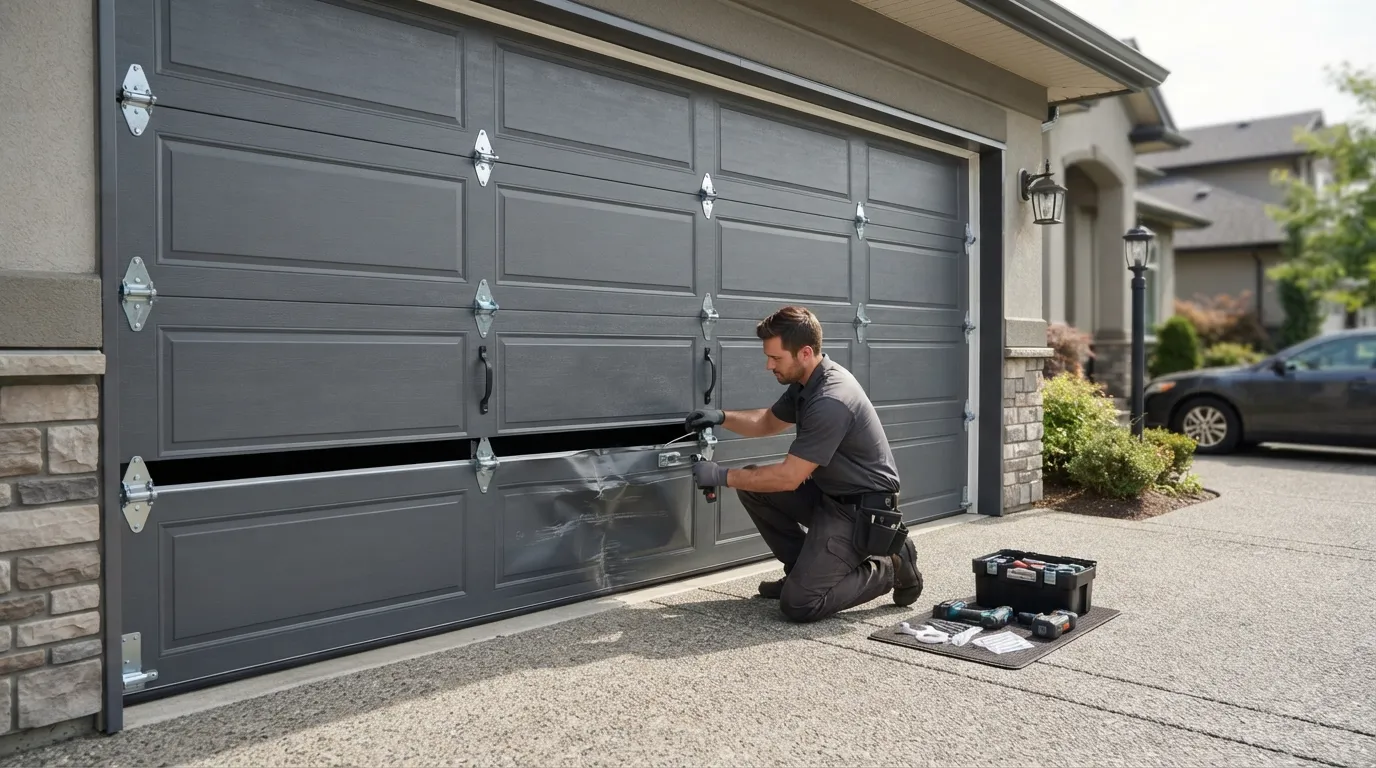
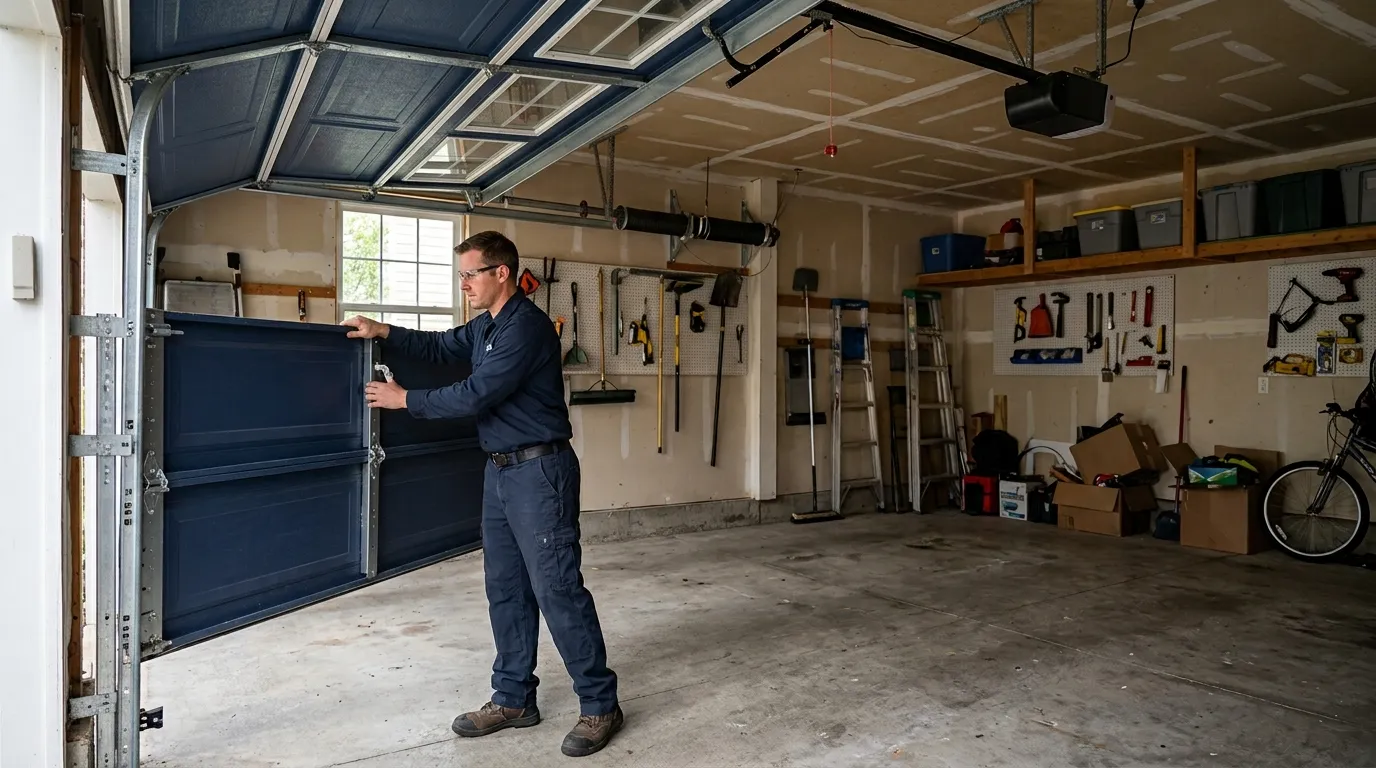
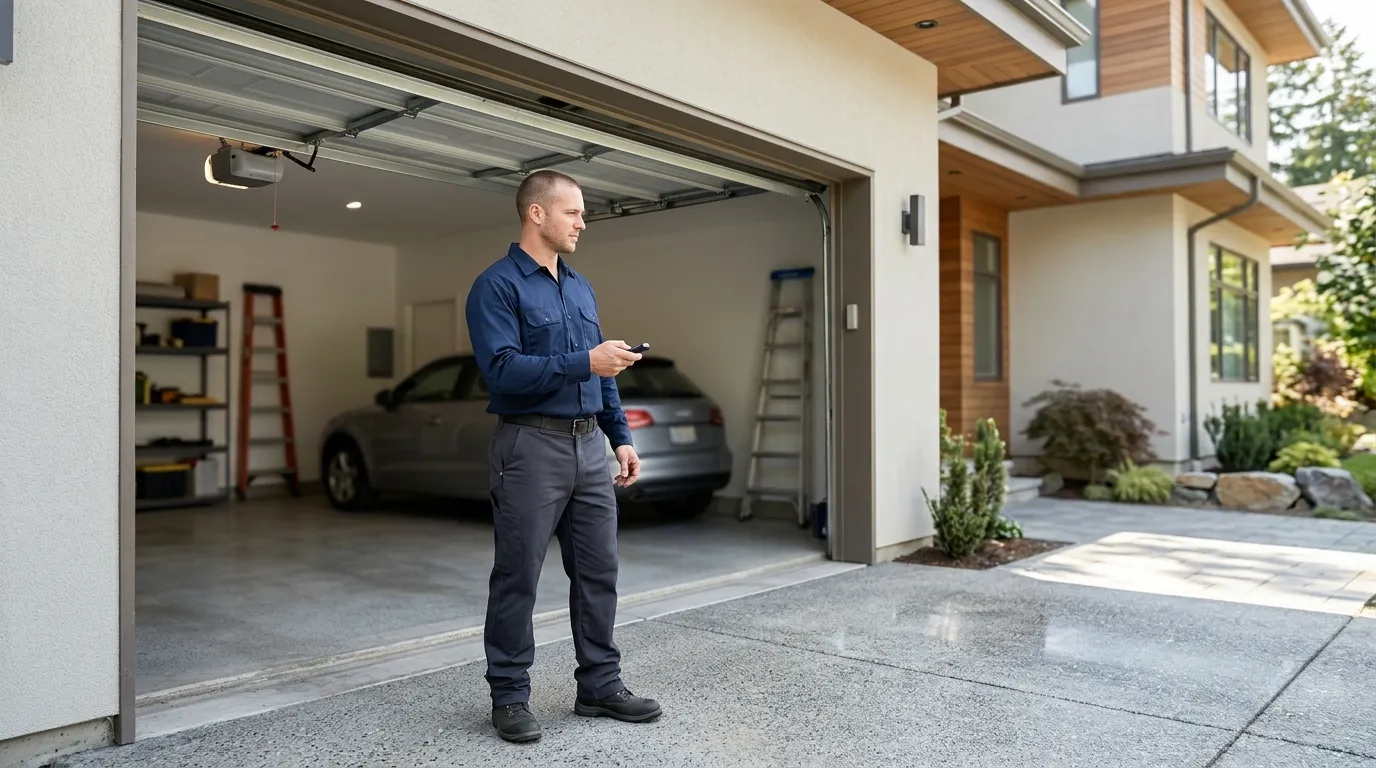
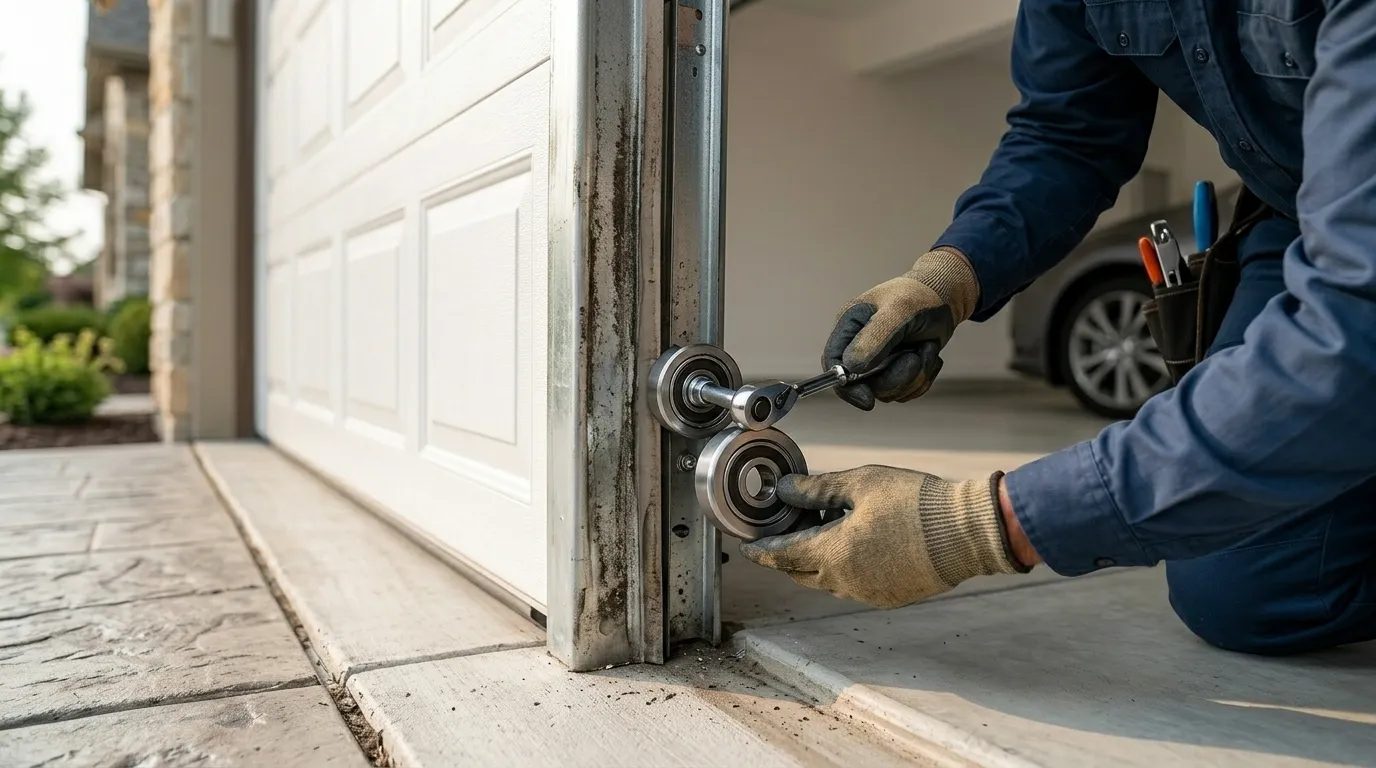
Rainbow's median build year of 1976 puts it earlier than the 1984 median across the wider service area, and noticeably earlier than the 1980s-90s stock that makes up most of the twenty communities we cover. That eight-to-fifteen-year gap shows up in the steel. Doors from the mid-70s often used thinner gauge panels than what went in during the 80s and 90s building push, and thinner steel dents and dishes more easily from the same bump - a trash can, a bike pedal, a trailer hitch backing in wrong.
The climate here is mild temperate, so we're not dealing with freeze-thaw cracking or the panel warping that comes from hard seasonal swings. What we do see is UV fade and chalking on older paint finishes that have had four extra decades of California sun compared to a door built in the 90s. A panel that's faded unevenly next to a newer replacement panel will always look mismatched even if the dent's gone - worth knowing before you commit to a single-panel fix versus a full door.
Rust at the bottom panel shows up occasionally too, usually from sprinkler overspray or a slope that pools water at the base track rather than any weather event specific to the area.